
Your gut microbiome influences memory by producing neurotransmitters like serotonin, GABA, and dopamine, which modulate brain signaling pathways. Microbial metabolites, especially SCFAs like butyrate, cross the blood-brain barrier to support neurogenesis, neuroprotection, and neuroplasticity. Communication occurs via neural pathways such as the vagus nerve, which transmits signals affecting the hippocampus and memory processes. Disruptions—dysbiosis—can impair these functions, but targeted interventions may enhance cognitive resilience, a topic you’ll find expanding in the details ahead.
Key Takeaways
- Gut microbiota produce neurotransmitters like serotonin and GABA that influence brain signaling and cognitive functions.
- Microbial metabolites such as SCFAs cross the blood-brain barrier, supporting neurogenesis and neuroprotection.
- Dysbiosis reduces beneficial metabolites, impairing memory and increasing neuroinflammation.
- The gut-brain connection via the vagus nerve transmits microbial signals that affect memory and emotional regulation.
- Restoring microbiome balance through probiotics and diet can improve memory and overall cognitive health.
The Role of Microorganisms in Brain Development
Microorganisms play a crucial role in brain development from the moment of birth, as the gut microbiota influences neural maturation and the formation of critical brain structures. The gut microbiome interacts with the developing nervous system through the gut-brain axis, facilitating communication between microbial communities and neural pathways. During early neurodevelopment, the composition of microbiota undergoes rapid changes, impacting regions such as the hippocampus and amygdala. These microorganisms modulate neurogenesis and synaptic formation, shaping circuits essential for cognitive functions. Disruptions in the microbiota, whether from stress or environmental factors, can delay gut barrier maturation and alter microbial diversity, leading to potential neurodevelopmental issues. Toll-like receptor pathways and other microbial-mediated mechanisms influence neural circuitry, emphasizing the importance of a balanced gut microbiome for ideal brain growth. Consequently, the composition and health of the microbiota are fundamental to proper neurodevelopment and subsequent cognitive abilities.
How Gut Bacteria Influence Memory and Learning Centers
Emerging research indicates that gut bacteria directly influence the brain regions responsible for memory and learning, primarily through the production of key neurotransmitters and metabolic compounds. The gut microbiota synthesize neurotransmitters such as serotonin and GABA, which modulate neural activity within the hippocampus, a critical structure for memory consolidation. Communication occurs via the vagus nerve, serving as a bidirectional pathway linking microbial signals to central neural circuits, thereby affecting neural plasticity and cognitive function. Alterations in gut microbial composition, such as dysbiosis, have been associated with impairments in spatial and cue-based memory, highlighting the microbiota’s role in cognitive processes. Microbial metabolites, particularly short-chain fatty acids, can cross the blood-brain barrier and support hippocampal neurogenesis and health. These mechanisms demonstrate how gut microbiota influence memory and learning centers, emphasizing their significance in maintaining cognitive integrity and potential for targeted interventions.
Neural Pathways Connecting the Gut and Brain
The neural pathways connecting the gut and brain primarily involve the vagus nerve, which serves as a critical bidirectional communication highway within the gut-brain axis. Sensory afferent fibers transmit signals derived from microbiota activity in the gut to the brainstem, particularly to the nucleus tractus solitarius (NTS). This relay modulates neural pathways influencing hippocampal functions related to memory and learning. Efferent fibers of the vagus nerve regulate gut physiology, including peristalsis, secretion, and immune responses, thereby integrating gut-brain communication. Microbiota-derived signals can activate vagal afferents, impacting hippocampal processing through nerve stimulation and neurotransmitter modulation. This dynamic interaction suggests that microbiota influence not only gut health but also cognitive processes, with vagus nerve activity serving as a conduit for gut-derived information to affect neural circuitry involved in memory formation and attention.
The Vagus Nerve as a Communication Highway
The vagus nerve serves as the primary neural conduit facilitating bidirectional communication between the gut microbiome and the brain, enabling the transfer of sensory and motor signals that influence physiological and cognitive processes. This critical component of the gut-brain axis transmits microbial metabolites and signals from the gut microbiota to neural signaling pathways, modulating brain activity related to mood, stress, and memory. Vagal afferent fibers are activated by microbial metabolites, impacting neurotransmitter levels like serotonin and GABA, which are essential for cognitive functions.
| Microbial Metabolites | Neural Signaling Pathways |
|---|---|
| Short-chain fatty acids | Vagus nerve activation |
| Neurotransmitter precursors | Modulation of brain regions |
| Lipopolysaccharides | Influence on neural circuits |
Disruptions in vagal signaling can impair gut-brain communication, affecting emotional regulation and memory. VNS, or vagus nerve stimulation, highlights this pathway’s significance in enhancing cognitive functions through neural modulation.
Neurotransmitter Production by Gut Microbes
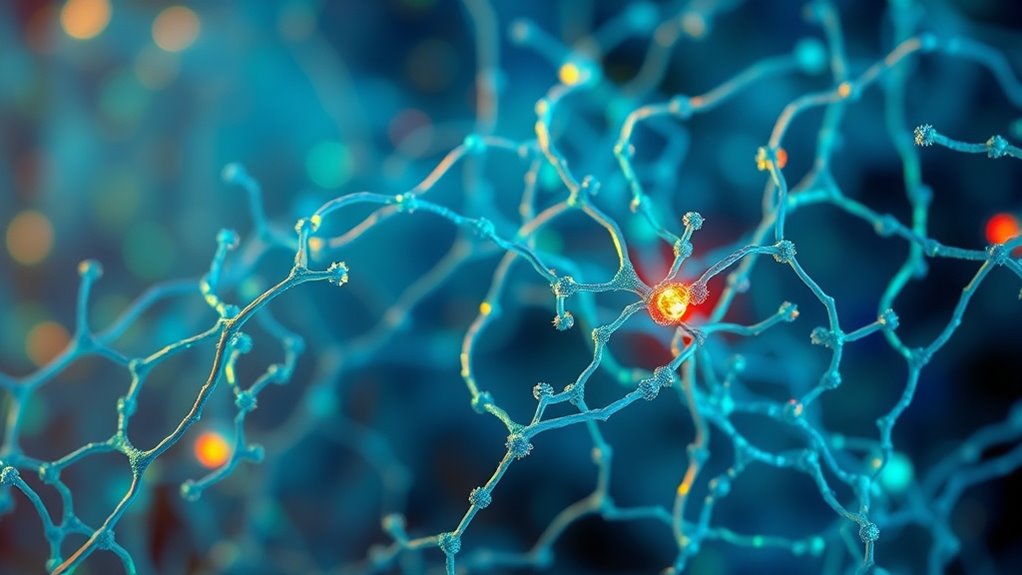
Gut microbes play a direct role in producing neurotransmitters that influence brain function and mood regulation. The microbiota synthesize key neurotransmitters such as serotonin, GABA, and dopamine, essential for neural signaling. Remarkably, roughly 90% of the body’s serotonin originates in the gastrointestinal tract via microbial activity, underscoring the gut-brain connection. Certain probiotic strains, including Lactobacillus and Bifidobacterium, enhance GABA production, an inhibitory neurotransmitter linked to reduced anxiety and improved cognitive stability. Microbial metabolites like short-chain fatty acids cross the blood-brain barrier, modulating neurotransmitter synthesis and signaling pathways fundamental to memory and cognition. Disruptions in microbiota balance, or dysbiosis, can impair neurotransmitter production, potentially leading to deficits in memory and cognitive function. This dynamic highlights how gut microbiota influence neural communication networks, emphasizing the importance of microbial health in maintaining ideal brain function and memory processes.
Impact of Microbial Metabolites on Brain Function
Microbial metabolites, particularly short-chain fatty acids like butyrate, influence brain function by crossing the blood-brain barrier and modulating neuroinflammation and neuroplasticity. These compounds can induce epigenetic changes and regulate neurotransmitter systems such as serotonin and GABA, which are essential for memory processes. Disruptions in their production due to dysbiosis are associated with impaired neurogenesis and cognitive deficits.
SCFAs and Neuroprotection
Have you ever wondered how compounds produced by gut microbes influence brain health? SCFAs, especially butyrate, are key microbial metabolites derived from dietary fiber fermentation by the gut microbiota. These SCFAs cross the blood-brain barrier, exerting neuroprotective effects by modulating neuroinflammation and supporting neurogenesis. Butyrate functions as an HDAC inhibitor, promoting gene expression linked to neuroprotection, learning, and memory. Elevated SCFA levels correlate with improved hippocampal-dependent memory and reduced neurodegenerative processes, highlighting their role in maintaining cognitive function. Conversely, dysbiosis diminishes SCFA production, impairing neuroprotective pathways and increasing neuroinflammation. Therefore, microbial metabolites like SCFAs are integral to brain health, influencing gene regulation and safeguarding against neurodegenerative diseases.
Microbial Influence on Neurotransmitters
Emerging evidence indicates that the metabolites produced by gut microbes, such as neurotransmitters, play a direct role in modulating brain function and behavior. The microbiota synthesizes critical neurotransmitters, including serotonin, GABA, and dopamine, which influence the gut-brain axis and neuronal signaling. Significantly, approximately 90% of the body’s serotonin originates in the gut, where microbiota activity affects its levels, impacting cognition and emotional regulation. Microbial metabolites like short-chain fatty acids can cross the blood-brain barrier, further modulating neuroinflammation and neuronal activity. Changes in microbiota composition can alter neurotransmitter availability, thereby affecting learning, memory, and behavior. Certain probiotic strains enhance neurotransmitter production, demonstrating a mechanistic link between gut microbiota and brain function, with potential implications for memory and mental health.
Effects of Dysbiosis on Cognitive Abilities
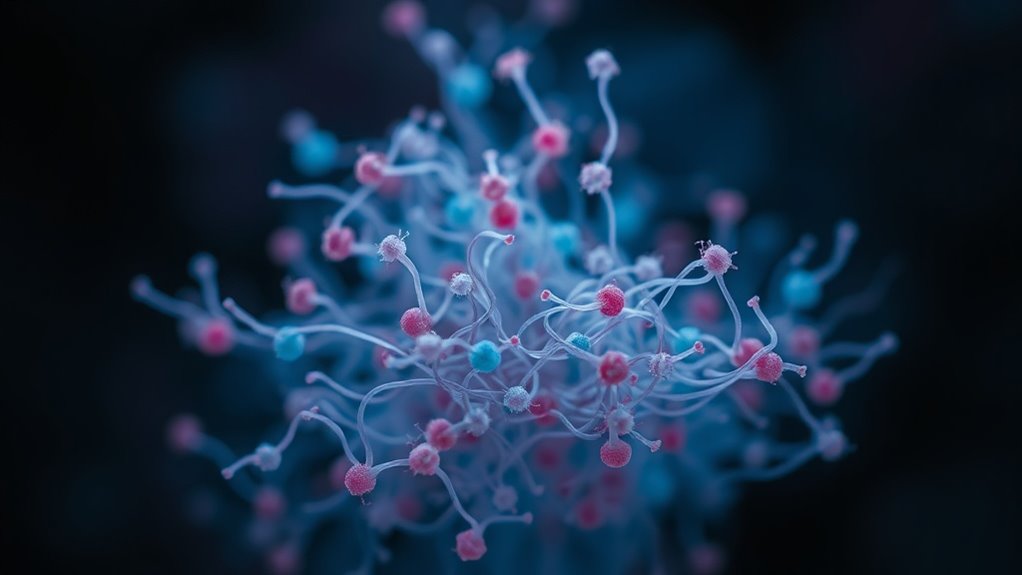
Dysbiosis, an imbalance in gut microbiota, has been increasingly recognized for its detrimental effects on cognitive abilities, particularly in impairing spatial and cue-based memory. Disruptions in microbial diversity reduce the production of neuroprotective metabolites like short-chain fatty acids, which are essential for maintaining ideal brain function via the gut-brain axis. This decline correlates with memory impairment, as diminished metabolite levels impair neuronal health and synaptic plasticity. Transfer studies further establish causality, demonstrating that microbiota from stressed or dysbiotic individuals can induce memory deficits in germ-free hosts. Elevated levels of bacterial genera such as Alistipes are associated with stress-related dysbiosis and subsequent cognitive decline. Importantly, restoring a balanced microbiome through probiotics or dietary interventions has shown promise in reversing memory impairments linked to dysbiosis. Overall, dysbiosis disrupts the gut microbiota’s capacity to support cognitive processes through altered microbial diversity and reduced neuroprotective metabolite production.
Microbiome Interactions With Brain Structures and Plasticity
The gut microbiome exerts a profound influence on brain structures such as the hippocampus and amygdala, shaping their development and functional capacity. Microbial signals transmitted via the gut-brain axis modulate neuroplasticity by altering neurotransmitter levels and synaptic connectivity within these regions. Variations in microbiota composition can impact hippocampal neurogenesis, a key process underlying memory formation and spatial learning. Through pathways like the vagus nerve, the microbiome communicates with the brain, directly influencing neural circuitry and functional efficiency. Disruptions in microbial diversity are associated with structural changes, including cortical thinning and limbic pathway alterations, which impair emotional regulation and cognitive flexibility. These interactions underscore the microbiome’s role in maintaining the delicate balance of brain plasticity, emphasizing its influence on both structural development and adaptive capacity. Consequently, gut microbiota composition directly shapes neural circuitry, affecting memory-related processes through complex, bidirectional communication mechanisms.
Therapeutic Strategies Targeting Gut Microbiota for Memory Enhancement
Advances in understanding the gut-brain axis have opened new avenues for enhancing memory through targeted modulation of the microbiota. Therapeutic strategies such as probiotic interventions, including Lactobacillus and Bifidobacterium strains, have demonstrated capacity for memory enhancement by influencing microbial composition and neurochemical pathways. Dietary approaches that increase fiber intake promote microbiome diversity and beneficial metabolite production, especially short-chain fatty acids, which support cognitive functions. Fecal microbiota transplantation from healthy donors has shown promise in reversing dysbiosis and restoring memory-related neural activity. Additionally, prebiotics and postbiotics modulate gut-brain signaling pathways, elevating neurotransmitter levels like serotonin and GABA critical for memory processes. These microbiome modulation techniques also aim to reduce neuroinflammation and enhance hippocampal neurogenesis, thereby strengthening cognitive resilience. Collectively, these targeted therapies exemplify a promising frontier in exploiting the gut microbiota for memory enhancement within the gut-brain axis framework.
Future Directions in Research on Gut Microbiome and Cognition
As research progresses, identifying specific microbial strains and metabolites that directly influence cognitive processes like memory and learning is becoming a central focus, promising to refine targeted interventions. Advancements in neuroimaging techniques will enable precise visualization of how gut microbiota alterations correlate with changes in brain structure and function, elucidating microbiome-host interactions in vivo. Longitudinal studies aim to determine how early-life microbiome modulation affects lifelong cognitive health and resilience against neurodegenerative diseases, providing insight into preventative strategies. Researchers are exploring microbiome interventions—such as personalized probiotics and dietary modifications—to optimize cognitive outcomes and mitigate decline. Integrating multi-omics approaches, including metagenomics, metabolomics, and epigenomics, will deepen our understanding of the complex mechanisms linking gut microbiota to neurocognitive functions. Ultimately, these future directions hold the potential to revolutionize approaches to cognitive health, emphasizing microbiome-targeted therapies for memory enhancement and neurodegenerative disease prevention.
Common Questions
How Does the Gut Microbiome Affect the Brain?
Your gut microbiome affects your brain through microbiome diversity and neurochemical production, influencing cognitive functions. It modulates immune responses and inflammation pathways, impacting neural health. Vagus nerve signaling transmits microbial signals directly, while microbial metabolites like SCFAs enhance neural plasticity. An imbalance, or dysbiosis, disrupts these processes, impairing memory and cognition by altering immune modulation and neural signaling, emphasizing the microbiome’s critical role in brain health.
What Trauma Is Stored in Your Gut?
Think of your gut as a vault where emotional trauma, like childhood memories and stress responses, are stored. This gut-stored trauma can alter microbiota, increasing permeability and fostering anxiety-related bacteria. Over time, it impacts the gut-brain axis, influencing mood and memory. Trauma release in the gut helps restore balance, reducing inflammation and anxiety effects, ultimately supporting healthier cognitive and emotional functioning through improved gut microbiome stability.
Can Bad Gut Bacteria Cause Brain Fog?
Yes, bad gut bacteria can cause brain fog by disrupting digestive health and increasing gut inflammation. This microbial imbalance affects the brain-gut axis, impairing neurotransmitter production and triggering an immune response that promotes neuroinflammation. These processes hinder cognitive clarity and mental focus, highlighting how gut inflammation and microbial imbalance directly influence brain function. Addressing these issues through dietary changes or probiotics can restore balance, reducing inflammation and improving mental clarity.
Can Probiotics Help With Memory?
Ironically, taking probiotics could be your secret weapon for memory enhancement. Specific probiotic strains, like Lactobacillus and Bifidobacterium, support the gut-brain axis and boost microbiome diversity, promoting cognitive support. By improving digestive health and reducing inflammation, probiotics facilitate neurotransmitter production, such as serotonin, which plays a role in memory. Regular supplementation enhances neural plasticity, making it a promising strategy for maintaining and improving memory function.
To Sum it up
So, despite all your efforts to nurture your brain with knowledge, it turns out your gut might be the silent influencer. Ironically, the very microorganisms you often overlook could hold the key to sharper memory and better cognition. As research advances, you’ll realize that controlling your microbiome isn’t just about digestion—it’s about mastering the intricacies of neural communication. Perhaps the most sophisticated memory aid is tucked away in your gut, waiting to be accessed.