
Proper hydration is vital for memory retention because water maintains the brain’s structure, supporting synaptic connections and neuroplasticity needed for encoding and retrieving memories. Dehydration reduces cerebrospinal fluid, impairs neural signaling, and disrupts neurotransmitter activity, which can hinder cognitive functions. Adequate hydration also guarantees peak blood flow and oxygen delivery, preserving neural health. Continuing explores how hydration influences brain chemistry and long-term memory processes essential for effective learning.
Key Takeaways
- Adequate hydration maintains cerebrospinal fluid, essential for smooth neural communication and effective memory encoding.
- Proper water levels support neuroplasticity and synaptic strength, crucial for memory formation and retrieval.
- Hydration preserves white matter integrity, facilitating efficient neural pathways needed for memory consolidation.
- Drinking enough water prevents brain cell shrinkage and electrolyte imbalances that impair memory and cognitive function.
- Maintaining hydration ensures optimal blood flow and oxygen delivery to the brain, supporting overall cognitive performance.
The Role of Water in Brain Structure and Function
Water is essential to maintaining the structural integrity and proper functioning of the brain, as it comprises approximately 75% of brain tissue. Adequate hydration guarantees the stability of neural tissue, enabling ideal neural activity essential for cognitive processes like memory. Water supports the formation and maintenance of synapses, vital for efficient neural communication; without proper hydration, synaptic connectivity can weaken. Brain cells depend on water to facilitate the transport of nutrients and the removal of waste products, which sustains neural health and cognitive function. Disruptions in hydration can lead to brain tissue shrinkage and impairments in neurotransmitter activity, directly affecting memory and learning abilities. Additionally, proper hydration preserves the integrity of the blood-brain barrier, safeguarding neural tissue from toxins. Maintaining sufficient water intake is indispensable for preserving brain structure and supporting the neural mechanisms underlying memory retention.
How Dehydration Impacts Neural Communication
Dehydration substantially impairs neural communication by reducing cerebrospinal fluid volume, which is crucial for the ideal transmission of electrical signals between neurons. A diminished cerebrospinal fluid compromises nerve impulse conduction, leading to slower or disrupted neural signaling. Loss of water also hampers neurotransmitter synthesis and release, decreasing synaptic efficiency critical for cognitive processes like memory. Additionally, dehydration causes brain cell shrinkage, impairing synaptic connectivity, particularly in the hippocampus, a region essential for memory encoding and retrieval. Electrolyte imbalances, especially sodium and potassium deficits, further exacerbate neural dysfunction by impairing nerve impulse conduction and disrupting ion gradients necessary for electrical signaling. Collectively, these effects diminish neural communication fidelity, impairing the brain’s ability to process and store information effectively. Maintaining adequate hydration supports cerebrospinal fluid integrity, electrolyte balance, and healthy brain cell function, which are all indispensable for strong neural communication and memory performance.
The Effect of Hydration on Memory Formation and Retrieval
Adequate hydration is essential for maintaining ideal brain connectivity, which directly influences both memory formation and retrieval processes. Even minor fluid loss can impair neural efficiency, reducing the brain’s ability to encode and access information effectively. Ensuring proper hydration supports memory efficiency by facilitating neurotransmitter activity and neuroplasticity necessary for learning and recall.
Hydration and Brain Connectivity
Maintaining ideal brain connectivity is essential for effective memory formation and retrieval, and hydration plays a critical role in this process. Adequate water intake supports neuroplasticity, enhancing synaptic strength within memory networks and reinforcing neural communication. Proper hydration maintains white matter integrity, facilitating efficient information transfer across brain circuits. When dehydrated, neurotransmitter function diminishes, disrupting functional connectivity and impairing communication between key regions like the hippocampus and prefrontal cortex. Even mild dehydration can reduce activity within brain circuits responsible for working memory and long-term recall, slowing cognitive processes. Consistent hydration sustains peak brain connectivity, ensuring robust neural communication, strengthened memory networks, and improved memory encoding and retrieval.
- Supports neuroplasticity and synaptic strength
- Maintains white matter and neural communication
- Preserves functional connectivity within memory circuits
Fluid Levels and Recall
Fluid levels have a direct and measurable impact on your ability to form and retrieve memories, as even mild dehydration can impair key neural processes involved in these functions. Adequate hydration levels are essential for essential brain function, supporting neurotransmitter synthesis and maintaining brain fluid balance. When hydration drops, dehydration compromises working memory and memory recall, hindering your capacity to encode and access information effectively. Studies demonstrate that dehydration, even at 1-2% body water loss, diminishes memory retention by disrupting neural communication within the hippocampus. Maintaining proper fluid intake promotes neuroplasticity, enabling your brain to adapt and consolidate new memories more efficiently. Therefore, hydration levels are vital for preserving the neural integrity necessary for effective memory formation and retrieval.
Memory Efficiency and Hydration
Since hydration directly influences hippocampal function, it plays a essential role in memory formation and retrieval, which are necessary for effective learning and cognitive performance. Adequate fluid levels support neuroplasticity and maximize neurotransmitter synthesis, both critical for memory efficiency. Dehydration impairs neural communication, reducing the brain’s ability to encode and access memories, especially in aging populations. Even mild dehydration can markedly diminish memory retention and learning capacity. Proper hydration enhances cognitive function by maintaining the integrity of neural pathways involved in memory processes.
- Supports neuroplasticity, allowing neural connections to strengthen during learning
- Promotes synthesis of neurotransmitters essential for memory encoding and retrieval
- Preserves overall brain health, ensuring the best possible memory efficiency and long-term recall
Water’s Influence on Brain Blood Flow and Oxygen Delivery
Maintaining adequate hydration is vital for sustaining ideal cerebral blood flow, which guarantees that neurons receive essential oxygen and nutrients. Dehydration increases blood viscosity, impairing circulation and reducing oxygen delivery to brain tissue. Consequently, proper hydration supports neurovascular function, directly influencing cognitive performance and memory retention.
Enhances Cerebral Circulation
Adequate hydration plays a critical role in optimizing cerebral circulation by ensuring consistent blood flow and efficient oxygen delivery to brain tissues. Proper hydration helps regulate blood viscosity, facilitating smooth flow through the brain’s vascular network. When dehydrated, blood volume decreases, impairing perfusion and reducing oxygen supply to neurons, which hampers brain health and cognitive function. Enhanced cerebral circulation from hydration supports neuroplasticity and neural signaling, essential for memory retention.
- Improved blood flow maintains nutrient delivery and waste removal within brain tissues
- Hydration preserves the integrity of vascular pathways, preventing perfusion deficits
- Consistent oxygen delivery sustains neural activity and supports cognitive resilience
Optimizes Oxygen Transport
Water’s influence on brain blood flow directly impacts oxygen transport, a vital factor for cognitive function and memory retention. Adequate hydration maintains ideal brain perfusion by regulating cerebral blood flow and reducing blood viscosity, facilitating efficient oxygen delivery to neural tissues. Dehydration causes vasoconstriction, impairing vascular regulation and decreasing cerebral blood flow, which limits oxygen supply to critical regions like the hippocampus. Improved hydration enhances cerebrovascular autoregulation, ensuring stable oxygen levels during cognitive tasks. This enhanced oxygen transport supports neural metabolism and function, directly influencing memory formation and retention. Maintaining hydration is essential for sustaining brain perfusion, preventing deficits caused by dehydration, and ensuring neural tissues receive the oxygen necessary for superior cognitive performance.
Hydration and Its Connection to Neuroplasticity
Since neuroplasticity underpins learning and memory, hydration plays a crucial role in supporting this process by ensuring ideal neuronal and synaptic function. Adequate hydration maintains the fluid environment necessary for neurotransmitter release and receptor activity, which are critical for neuroplastic changes. When dehydrated, neuroplasticity is impaired, leading to decreased hippocampal volume and reduced capacity for forming new neural pathways. Studies demonstrate that even mild dehydration lowers brain-derived neurotrophic factor (BDNF), a protein essential for synaptic plasticity and memory consolidation. Proper hydration promotes neurogenesis in the hippocampus, enhancing memory retention and cognitive flexibility.
- Maintains fluid environments essential for neurotransmitter activity, facilitating efficient synaptic transmission
- Supports neurogenesis in the hippocampus, boosting memory and learning capacity
- Preserves BDNF levels, promoting synaptic plasticity and neural adaptation
The Consequences of Mild Dehydration on Cognitive Performance
Mild dehydration, characterized by a 1-2% reduction in body water, can substantially impair various aspects of cognitive performance. It negatively affects memory retention by disrupting neural function, particularly within the hippocampus, which is vital for forming and retrieving memories. Even slight dehydration decreases performance on attention and reasoning tasks, essential components of cognitive ability. As hydration status declines, brain function becomes compromised, leading to cognitive decline, especially in tasks requiring complex processing. Research shows that dehydration impairs neural pathways involved in memory, reducing the brain’s capacity for neuroplasticity and adaptation. This diminishes the brain’s ability to strengthen and maintain memory pathways, accelerating cognitive deterioration over time. Maintaining proper hydration is essential to preserve cognitive performance, as even mild dehydration can hinder neural efficiency and memory processes. Ensuring adequate hydration supports brain function, helping to sustain memory retention and prevent cognitive decline.
Hydration Strategies to Support Memory and Learning
Have you considered that strategic hydration can substantially enhance your memory and learning capabilities? Implementing effective hydration strategies directly supports cognitive function by maintaining ideal hydration levels, essential for hippocampal activity and neuroplasticity. Proper water intake before and during study sessions improves concentration, aids in encoding new information, and boosts memory retention. Consuming water-rich foods such as fruits and vegetables provides additional hydration, promoting learning support and reinforcing memory consolidation. To optimize hydration and cognition, consider these approaches:
- Regularly drinking water throughout the day, especially before cognitive tasks
- Incorporating hydrating foods into your diet to supplement water intake
- Monitoring hydration levels to prevent even minor dehydration that impairs cognitive processes
Age-Related Changes in Hydration and Memory Decline
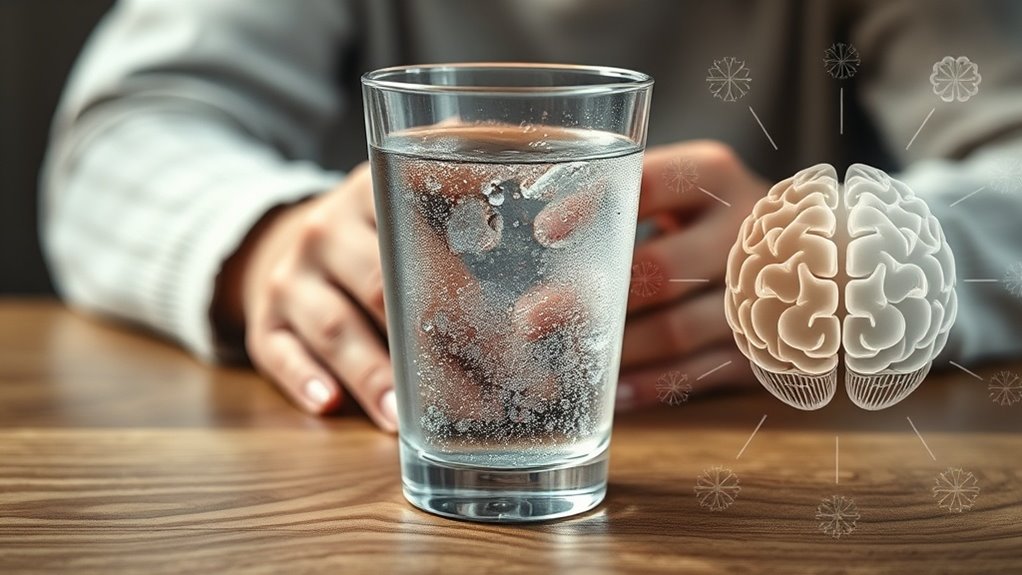
As individuals age, their total body water content declines by approximately 10-15%, primarily due to muscle loss and increased adiposity, which diminishes hydration reserves. This reduction in hydration status predisposes older adults to dehydration, even with modest fluid deficits. Age-related decline in kidney efficiency further impairs water conservation, elevating dehydration risk. Dehydration negatively impacts hippocampal function, a brain region essential for memory retention, leading to cognitive decline. Additionally, older adults often experience diminished thirst sensation, making it harder to recognize dehydration symptoms and maintain adequate water intake. As a result, the combination of decreased hydration reserves and impaired regulatory mechanisms exacerbates the age-related decline in memory performance. Maintaining proper hydration is essential in mitigating these effects, supporting neural processes involved in memory, and slowing the progression of cognitive decline associated with aging. Addressing hydration status in older adults is indispensable for preserving memory function over time.
Recognizing and Preventing Dehydration-Related Memory Impairment
Recognizing the early signs of dehydration is crucial for preventing memory impairment, especially since even a 1-2% reduction in body water can negatively affect cognitive functions such as working memory and long-term recall. Monitoring hydration status allows you to address dehydration before it impacts brain function. Older adults are particularly susceptible due to diminished thirst sensation and decreased water reserves, increasing their risk of cognitive decline. To prevent dehydration-related memory issues, focus on maintaining adequate water intake and being alert to signs of dehydration.
Consider these indicators:
- Dry mouth and sticky saliva
- Dark urine with a strong odor
- Persistent fatigue or brain fog
Common Questions
How Does Hydration Affect Memory?
Hydration directly impacts brain function and cognitive performance by supporting neural connectivity within memory circuits. Adequate hydration levels enhance mental clarity and focus, which are vital for effective memory encoding and retrieval. Proper hydration strategies prevent brain fog and optimize neural transmission, leading to improved memory retention. Staying well-hydrated is essential for maintaining the neuroplasticity necessary for learning and consolidating new information efficiently.
What Is the #1 Drink for Memory Loss?
The #1 drink for memory loss is plain water. Proper hydration boosts neural function, reduces brain fog, and enhances mental clarity. Maintaining good hydration habits is essential for a cognitive boost and preventing memory decline. Hydration tips include drinking enough water throughout the day and avoiding caffeinated or sugary beverages. Effective hydration strategies support your brain’s ability to retain information and improve overall cognitive performance, especially as you age.
Does Drinking a Lot of Water Prevent Dementia?
Drinking lots of water alone doesn’t prevent dementia, but maintaining proper hydration levels is essential for neural health and mitigating cognitive decline. Adequate hydration supports mental clarity, reduces brain fog, and enhances focus, which are early signs of memory function decline. Effective hydration strategies help sustain brain function, but they should be part of an extensive approach to cognitive health, as hydration alone isn’t sufficient to prevent dementia.
Why Is Hydration Important for Dementia Patients?
Hydration is crucial for dementia patients because it maintains hydration balance, supporting brain function and reducing dehydration risks. Proper fluid intake helps regulate electrolyte levels, which are essential for neural signaling. Dehydration can accelerate cognitive decline and impair mental clarity. As part of the aging process, ensuring adequate hydration helps mitigate the effects of cognitive deficits and preserves overall brain health, emphasizing the importance of routine hydration monitoring in dementia care.
To Sum it up
Maintaining proper hydration is akin to fueling a finely tuned engine; without it, your brain’s intricate network falters, impairing memory and cognitive function. Dehydration disrupts neural communication, diminishes blood flow, and hampers neuroplasticity, accelerating age-related decline. By prioritizing regular water intake, you reinforce the foundation of your cognitive architecture, ensuring your memory remains resilient and adaptable. In this delicate symphony of neural activity, hydration is the conductor that keeps your mind’s melody clear and harmonious.