
To boost brain function naturally, incorporate herbs like sage, turmeric, ginkgo biloba, ashwagandha, gotu kola, lemon balm, and thyme. Sage and lemon balm enhance memory and cognitive clarity, while turmeric’s curcumin offers anti-inflammatory neuroprotection. Ginkgo improves cerebral blood flow, and ashwagandha reduces stress and supports neural resilience. Gotu kola and thyme promote neuroplasticity, nerve regeneration, and neuronal integrity. Exploring these options provides a scientifically grounded approach to optimizing mental performance and long-term brain health.
Key Takeaways
- Herbs like sage, ginkgo biloba, and gotu kola support memory, cognitive performance, and neuroprotection through enhanced neural communication and circulation.
- Anti-inflammatory herbs such as turmeric and lemon balm help reduce brain inflammation and oxidative stress, protecting neurons and promoting mental clarity.
- Lemon balm and thyme improve memory recall, alertness, and mental focus, offering natural cognitive enhancement and stress reduction.
- Ashwagandha and gotu kola promote neuroplasticity, nerve regeneration, and brain resilience, supporting long-term cognitive health.
- Regular use of these herbs provides neuroprotective benefits, boosts mental clarity, and may slow age-related cognitive decline.
Sage
Sage contains compounds that inhibit acetylcholinesterase, which leads to increased levels of acetylcholine in the brain and supports cognitive processes such as memory and learning. This biochemical action underpins sage’s role in cognitive enhancement, as elevated acetylcholine levels are associated with improved neural communication and synaptic plasticity. Research demonstrates that sage can enhance cognitive performance and reaction times across diverse populations, making it a valuable adjunct in maintaining mental acuity. Regular intake of sage, whether through culinary use or supplementation, has been shown to boost word recall and overall cognitive function. Its neuroprotective properties are linked to its ability to slow cognitive decline, potentially delaying age-related neurodegenerative processes. By modulating cholinergic pathways, sage not only supports immediate cognitive function but also contributes to long-term neuroprotection. These attributes establish sage as a potent natural agent for optimizing brain health and resilience.
Turmeric
Turmeric, a widely used spice, contains curcumin—a bioactive compound exhibiting potent antioxidant and anti-inflammatory effects that support brain health. Curcumin’s ability to cross the blood-brain barrier enables it to directly target neural tissue, reducing beta-amyloid plaques associated with Alzheimer’s disease. Enhanced formulations, such as Longvida, improve curcumin’s absorption, leading to measurable cognitive benefits, including memory improvements within an hour of ingestion. Regular dietary intake of turmeric, either through cooking or supplements, may bolster neural resilience, improve mood, and enhance cognitive function over time. When paired with black pepper, curcumin’s bioavailability considerably increases, maximizing its neuroprotective potential. These properties make turmeric a beneficial natural adjunct for supporting brain health through its anti-inflammatory and antioxidant mechanisms. Incorporating turmeric into your routine could provide a strategic, science-backed approach to maintaining cognitive vitality and mitigating neurodegenerative processes.
Ginkgo Biloba
Ginkgo Biloba, an ancient Chinese herbal remedy, has garnered scientific interest for its potential to enhance cognitive function and support neural health. Its primary mechanism involves increasing blood flow to the brain, which may improve oxygen and nutrient delivery critical for cognitive processes. Research suggests that Ginkgo Biloba’s flavonoids and terpenoids possess antioxidant properties, protecting brain cells from oxidative damage. Systematic reviews show mixed but generally positive evidence for slowing cognitive decline in mild cognitive impairment and early dementia. When considering Ginkgo Biloba for cognitive benefits, keep these points in mind:
- Typical dosages range from 120 to 240 mg daily.
- It may support memory retention and recall.
- Its effects are more pronounced in age-related cognitive decline.
- Always consult a healthcare professional before use to avoid interactions.
Incorporating Ginkgo Biloba could be a strategic move to bolster cognitive function, but careful dosing and medical guidance are essential.
Ashwagandha
Ashwagandha, an ancient herb rooted in Ayurvedic medicine, has gained scientific recognition for its neuroprotective properties, particularly its ability to reduce beta-amyloid plaques associated with Alzheimer’s disease. Its active compounds, withanolides, exert anti-inflammatory and antioxidant effects, supporting neuroprotection. Clinical studies demonstrate that Ashwagandha enhances cognitive performance, including memory and mental clarity, in both healthy individuals and those with cognitive impairments. Regular supplementation around 600 mg daily has shown improvements in focus, sleep, and cognitive alertness.
| Benefit | Mechanism | Evidence |
|---|---|---|
| Cognitive enhancement | Supports neuroplasticity | Clinical improvements observed |
| Neuroprotection | Reduces beta-amyloid plaques | Scientific validation |
| Stress reduction | Modulates cortisol levels | Anxiety and stress benefits |
| Overall brain health | Anti-inflammatory, antioxidant | Long-term resilience |
Ginseng

Have you ever wondered how ginseng can support cognitive function? Its active compounds, ginsenosides, are linked to enhancements in memory and overall brain health. Research indicates that ginseng may reduce mental fatigue and bolster concentration, especially during stressful periods. The mechanisms involve its anti-inflammatory and antioxidant properties, which help protect brain cells from oxidative damage.
Consider these key points:
- Ginsenosides improve synaptic plasticity, facilitating learning and memory.
- Regular intake around 200 mg daily can yield noticeable cognitive benefits.
- Ginseng’s properties can mitigate mental fatigue, promoting sustained focus.
- Its neuroprotective effects support long-term brain health by reducing oxidative stress.
While generally safe, ginseng may cause side effects such as insomnia or increased heart rate, and interactions with medications are possible. Consulting a healthcare professional guarantees appropriate use aligned with your brain health goals.
Gotu Kola
Gotu Kola demonstrates notable neuroprotective properties through its triterpenoid compounds, which support neural integrity and mitigate oxidative stress. Empirical evidence indicates it can enhance memory performance and cognitive function in both animal models and human studies. Its potential to improve cerebral circulation suggests a role in managing neurodegenerative conditions, warranting further investigation into its efficacy and safety.
Herbal Neuroprotection Potential
Although often overlooked, Gotu Kola (Centella asiatica) has demonstrated significant neuroprotective properties that support cognitive health. Its ability to reduce oxidative stress and mitochondrial dysfunction underpins its role in neuroprotection. You can expect these benefits:
- Enhances nerve regeneration, promoting neuroplasticity and cognitive enhancement.
- Combats neuroinflammation, protecting neurons from age-related decline.
- Supports mitochondrial health, ensuring excellent energy production in brain cells.
- Reduces oxidative damage, preserving cognitive functions over time.
These mechanisms highlight Gotu Kola’s potential as a natural neuroprotective agent. Its traditional use aligns with scientific findings, emphasizing its capacity to fortify brain resilience and mitigate neurodegenerative processes. Incorporating Gotu Kola may, thus, be a strategic step in supporting long-term cognitive health.
Cognitive Enhancement Evidence
Emerging scientific evidence indicates that Gotu Kola (Centella asiatica) can markedly enhance cognitive functions such as memory, focus, and neuroplasticity, making it a valuable adjunct for mitigating age-related decline. Its role in cognitive enhancement is supported by studies showing improvements in memory performance and mental clarity, likely due to its neuroprotective properties. Gotu Kola supports brain health by reducing oxidative stress and promoting mitochondrial function, critical factors in maintaining neural integrity. Compounds like asiaticoside exhibit neuroprotective effects that may slow or prevent neurodegenerative processes. Clinical trials further substantiate that regular consumption of Gotu Kola correlates with improved cognitive performance, emphasizing its potential as a natural agent for supporting brain health and enhancing neuroplasticity in aging populations.
Lemon Balm
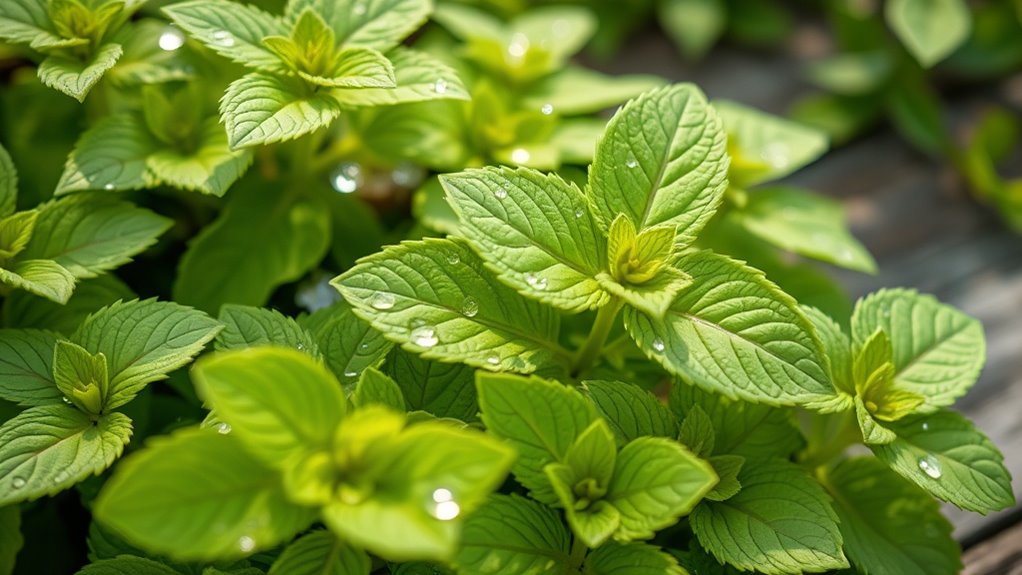
Lemon balm (Melissa officinalis) contains rosmarinic acid, a compound with notable anti-inflammatory and antioxidant properties that support neuronal health and cognitive function. These bioactive effects help mitigate oxidative stress and inflammation in the brain, essential for maintaining brain health. Research indicates that lemon balm can enhance memory and cognitive performance, especially in older adults. Additionally, lemon balm consumption as tea or supplement has been associated with increased mental alertness and reduced anxiety levels. Its neuroprotective properties may also alleviate neuropsychiatric symptoms in conditions like Alzheimer’s disease. Consider these key points:
Lemon balm’s rosmarinic acid supports brain health, enhances memory, and reduces anxiety naturally.
- Lemon balm supports cognitive function by improving memory recall and mental clarity.
- Its antioxidant properties protect neurons from oxidative damage, promoting brain health.
- Regular intake may reduce anxiety and stress, thereby enhancing overall cognitive performance.
- Evidence suggests lemon balm improves both immediate and delayed recall, aiding age-related cognitive decline.
Incorporating lemon balm into your routine could be an effective natural strategy to boost brain health.
Thyme
Have you considered how thyme’s bioactive compounds contribute to neural preservation and cognitive enhancement? Thyme contains antioxidants that mitigate oxidative damage and protect neurons from premature aging, supporting overall brain health. Its active compounds enhance levels of omega-3 DHA in the brain, which is vital for maintaining cognitive function, including working memory and mood regulation. Additionally, the aroma of thyme has been shown to improve memory and mental alertness, likely through olfactory pathways that influence neural activity. Incorporating fresh thyme into your diet—whether through roasting, salads, or other dishes—can provide ongoing neuroprotective benefits, helping to reduce the risk of neurodegenerative decline. By supporting cellular integrity and promoting neuroplasticity, thyme’s properties make it a valuable natural adjunct for maintaining cognitive function and long-term brain health. Its combination of biochemical and aromatic effects underscores its role as a potent herb for cognitive support.
Common Questions
What Is the Best Herb for Brain Function?
You might find herbal synergy most effective with Ginkgo biloba, which enhances cerebral blood flow, supported by traditional remedies emphasizing its cognitive benefits. Botanical extracts like Bacopa monnieri promote neuroplasticity, while sage acts as an acetylcholinesterase inhibitor, increasing acetylcholine. Combining these herbs creates an integrative approach, leveraging their distinct mechanisms to optimize brain function. This analytical synergy maximizes cognitive enhancement by integrating traditional wisdom with scientific validation of their bioactive compounds.
What Is the Best Natural Brain Booster?
If you’re seeking the top natural brain booster, think of it as a symphony where herbs like ginseng and ginkgo biloba are conductors, fine-tuning neurotransmitter support for ideal cognitive enhancement. These herbs enhance mental clarity by improving blood flow and reducing inflammation, creating a clear mental landscape. Their adaptogenic properties help sustain focus and memory, making them essential tools for anyone aiming to sharpen their cognitive edge naturally.
What Is the Fastest Way to Improve Brain Function?
The fastest way to improve brain function involves a combination of targeted brain exercises, dietary adjustments, and sleep optimization. Engaging in cognitive training enhances neural connections, while a diet rich in omega-3s, antioxidants, and herbs like Ginkgo Biloba supports neuroplasticity. Prioritizing quality sleep restores cognitive resources, leading to immediate improvements in mental clarity and processing speed. These strategies synergistically accelerate brain function enhancement in the shortest time frame.
What Is the Most Powerful Herb for Mental Health?
Ever wondered which herb holds the greatest power for mental health? Ginseng stands out due to its herbal synergy, supporting cognitive enhancement and mental clarity. Its active ginsenosides modulate neurotransmitters, offering neuroprotection and stress management. This adaptogen’s proven efficacy in improving attention, memory, and overall mental performance makes it the most potent natural herb for mental health, especially when standardized for maximum dosage and quality.
To Sum it up
By incorporating these natural herbs into your routine, you’re equipping your brain with a symphony of cognitive support. Imagine your mind as a finely tuned instrument, each herb acting as a precise string or key, enhancing clarity, memory, and focus. While their effects vary, understanding their mechanisms allows you to optimize mental performance naturally. Ultimately, these botanicals serve as a demonstration to nature’s ability to nurture and elevate your cognitive health, making every thought sharper and more resilient.