
The hidden link between anxiety and nutrition lies in your gut health and the nutrients you consume. A balanced microbiome supports mood by producing neurotransmitters like serotonin, while nutrients such as magnesium, omega-3s, B vitamins, and antioxidants help regulate your nervous system and reduce inflammation. Incorporating calming foods like leafy greens, fatty fish, and probiotic-rich options can make a difference. Exploring this connection further can reveal simple, effective ways to promote your emotional well-being.
Key Takeaways
- Gut microbiome imbalance can increase inflammation and disrupt neurotransmitter production, raising anxiety levels.
- Nutrients like magnesium, omega-3s, and B vitamins support brain health and help regulate mood.
- Antioxidants from colorful fruits and vegetables reduce oxidative stress linked to anxiety.
- Consuming probiotic-rich foods improves gut-brain communication and may alleviate social anxiety.
- Dietary patterns emphasizing whole foods, healthy fats, and fiber help maintain stable mood and reduce anxiety symptoms.
Understanding the Gut-Brain Connection
The gut-brain connection is a complex, bidirectional communication system that links your gastrointestinal health with your mental well-being. This system, known as the gut-brain axis, involves the gut microbiome—trillions of beneficial bacteria that influence mood regulation and brain function. Your gut microbiota produces key neurotransmitters like serotonin, with about 95% of the body’s serotonin generated in the gut lining. Neurotransmitters such as serotonin, GABA, and dopamine impact your emotional health and anxiety levels. When the microbiota becomes imbalanced—a condition called dysbiosis—it can lead to increased inflammation and disrupted neurotransmitter production, worsening anxiety symptoms. Maintaining gut health through a balanced diet, fiber-rich foods, and probiotics supports a healthy microbiome, which in turn promotes better mood regulation. Prioritizing gut health is essential for supporting mental well-being, as the gut-brain axis plays a pivotal role in your emotional resilience.
Key Nutrients That Influence Anxiety Levels
Building on the connection between gut health and mental well-being, paying attention to specific nutrients can considerably influence anxiety levels. Nutrients like magnesium, omega-3 fatty acids, B vitamins, zinc, and vitamin D are essential for mood regulation and brain health. Magnesium-rich foods such as leafy greens, nuts, and seeds help regulate the nervous system, promoting calmness and reducing anxiety symptoms. Omega-3s from fatty fish like salmon support neurotransmitter function, which influences mood and stress responses. B vitamins, especially B6 and B12 found in avocados and nuts, aid in neurotransmitter production. Zinc, present in oysters and cashews, modulates the central nervous system, potentially decreasing anxiety. Vitamin D, obtainable from sunlight and fortified foods, supports mood regulation. Prioritizing these nutrients through balanced nutrition can strengthen your brain health and help manage anxiety symptoms effectively.
| Nutrient | Food Sources |
|---|---|
| Magnesium | Leafy greens, nuts, seeds |
| Omega-3 fatty acids | Salmon, mackerel, sardines |
| B vitamins | Avocados, nuts, whole grains |
| Zinc | Oysters, cashews |
| Vitamin D | Sunlight, fortified foods |
How Antioxidants and Phytochemicals Support Mental Well-Being
Since oxidative stress can impair brain function and contribute to anxiety, incorporating antioxidants and phytochemicals into your diet offers a scientifically supported way to support mental well-being. Antioxidants like vitamins C and E, found in berries, leafy greens, and nuts, help reduce oxidative stress in the brain, which is linked to anxiety symptoms. Phytochemicals such as curcumin in turmeric and ginger possess anti-inflammatory properties that support brain health and aid in mood regulation. Consuming high-antioxidant foods increases your overall antioxidant capacity, which has been associated with lower anxiety levels and improved emotional resilience. Spices rich in phytochemicals also have neuroprotective effects that help stabilize mood and reduce stress. A diet abundant in colorful fruits, vegetables, and plant-based foods provides essential compounds that support brain chemistry, reduce inflammation, and promote overall mental well-being. These nutrients work synergistically to protect brain health and enhance mood regulation.
Dietary Patterns That Promote Calmness and Balance
Incorporating specific dietary patterns can markedly promote calmness and emotional balance, especially when tailored to support your nervous system and mood regulation. A balanced diet rich in magnesium from leafy greens, nuts, and seeds helps regulate nervous system activity, fostering calmness. Including omega-3 fatty acids from fatty fish like wild Alaskan salmon can reduce inflammation and promote mood stability. Eating antioxidant-rich fruits and vegetables, such as berries and leafy greens, may help alleviate anxiety symptoms by combating oxidative stress. Emphasizing complex carbohydrates like whole grains and legumes ensures steady blood sugar levels, which prevents irritability and anxious feelings. Additionally, focusing on gut-brain health by incorporating probiotic foods like kefir, sauerkraut, and pickles can enhance mood regulation and reduce social anxiety. Adopting these dietary patterns supports overall mental health, creating a foundation for reduced anxiety symptoms through better nutrition and balanced blood sugar levels.
Practical Steps to Incorporate Anxiety-Reducing Foods
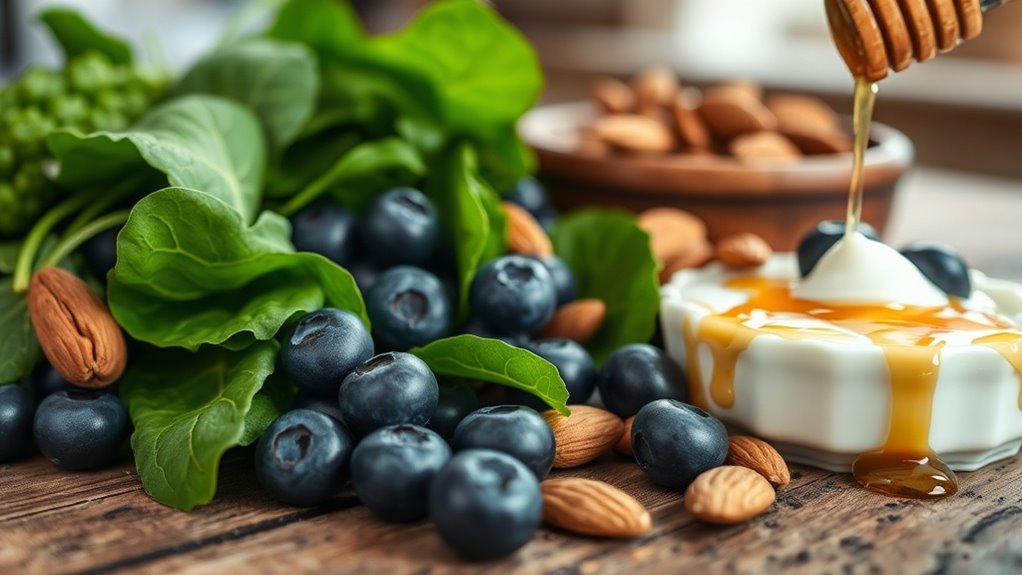
To effectively reduce anxiety through your diet, start by including magnesium-rich foods such as leafy greens, nuts, and seeds in your daily meals, as they help regulate nervous system activity and promote calmness. Incorporate omega-3 fatty acids by eating fatty fish like wild Alaskan salmon at least twice a week to support mood stabilization and reduce inflammation. Adding probiotic foods like kefir, sauerkraut, or pickles can enhance gut health, which is linked to lower anxiety symptoms through improved neurotransmitter production. Including B vitamin sources like avocados and almonds further stimulates neurotransmitter synthesis, aiding stress regulation. To optimize your efforts, limit processed foods high in sugar and unhealthy fats, as these can contribute to inflammation and mood fluctuations. Adopting an anti-inflammatory diet with balanced meals helps maintain stable blood sugar levels and supports overall mental health. Consistently incorporating these foods can make a tangible difference in managing anxiety symptoms naturally.
Common Questions
What Is the Link Between Nutrition and Anxiety?
Your nutrition directly impacts your anxiety through factors like meal timing, mineral deficiencies, and gut health. Eating balanced meals with omega-3s, vitamins, and staying hydrated can stabilize blood sugar and reduce inflammation. Limiting processed foods, sugar, and caffeine helps prevent spikes that worsen anxiety. Incorporate herbal remedies when needed, and maintain a proper vitamin balance for better mental well-being, while mindful of caffeine effects and the importance of good gut health.
What Is the 3-3-3 Anxiety Rule?
The 3-3-3 anxiety rule helps ground you by focusing on your senses—seeing, hearing, and feeling—reducing overwhelm. For better anxiety management, pair this with mindful eating, maintaining steady blood sugar, and staying hydrated. Address nutrient deficiencies through vitamin supplements if needed, avoid processed foods, and consider herbal remedies or proper meal timing to support gut health and reduce dietary triggers that may worsen anxiety.
What Is the #1 Worst Habit for Anxiety?
Your mind is like a delicate garden, and caffeine is a wild weed choking out healthy growth. The #1 worst habit for anxiety is excessive caffeine consumption, which overstimulates your nervous system, disrupts sleep, and heightens stress. To nurture your mental health, focus on mindful eating, reducing sugar and processed foods, staying well-hydrated, and maintaining consistent meal timing. This approach supports gut health, vitamin balance, and emotional resilience.
Can Lack of Nutrition Cause Anxiety?
Lacking proper nutrition can definitely cause anxiety. Nutritional deficiencies, like low magnesium, vitamin D, or omega-3s, impair brain and gut health, increasing anxiety risk. Poor meal timing, high sugar intake, and processed foods can cause blood sugar swings, while food sensitivities and dehydration worsen symptoms. Maintaining balanced meals, staying hydrated, and supporting gut health are essential strategies to help manage anxiety and improve overall well-being.
To Sum it up
By now, you realize that nourishing your gut with nutrient-dense foods can substantially reduce anxiety—much like a wise apothecary of old would recommend herbal remedies. Focus on a balanced diet rich in omega-3s, antioxidants, and fiber to support your mental health naturally. Small, consistent dietary changes can lead to profound calmness over time. Remember, your choices today shape your well-being tomorrow—so choose wisely and trust in the power of nutrition to nurture your mind.