
To build resilience through mindful habits, start by incorporating mindful breathing during your daily routines, such as during commutes or breaks, to activate your relaxation response. Practice guided meditation regularly to enhance emotional regulation, and use body scans or muscle relaxation to promote physical calm. Cultivating gratitude and employing grounding techniques offer immediate stress relief and strengthen your mental resilience over time. By consistently practicing these evidence-based strategies, you’ll develop greater emotional strength and clarity to handle life’s challenges more effectively.
Key Takeaways
- Incorporate daily mindful breathing exercises like 4-7-8 to activate relaxation and reduce stress.
- Use guided meditation regularly to enhance emotional regulation and strengthen neuroplasticity.
- Practice body scan and muscle relaxation to release physical tension and promote calmness.
- Maintain a gratitude journal to shift focus to positive aspects, fostering resilience and emotional balance.
- Employ grounding techniques during stress to stay present, reduce anxiety, and build emotional stability over time.
Incorporating Mindful Breathing Into Daily Routines
Incorporating mindful breathing into your daily routines can be a simple yet powerful way to build resilience, especially during busy or stressful moments. When you practice mindful breathing—such as 4-7-8 or coherent breathing—you activate your body’s relaxation response, helping to reduce stress and improve emotional regulation. Even just a few minutes during your commute or coffee break can make a meaningful difference. Using guided breathing exercises through apps or recordings makes it easier to establish consistent habits, fitting seamlessly into your schedule. As you develop this practice, you’ll notice that during moments of overwhelm, mindful breathing shifts your body’s response from alert to calm, fostering mental clarity. Over time, these small daily habits strengthen your resilience by promoting relaxation and emotional balance, enabling you to respond more adaptively to challenges. Mindful breathing becomes a practical, accessible tool for cultivating resilience amidst life’s inevitable stressors.
Using Guided Meditation to Strengthen Emotional Balance
Because emotional balance is essential for resilience, guided meditation offers a structured way to cultivate calm and self-awareness. By engaging in mindfulness practices such as visualization and calming imagery, you can enhance emotional regulation and reduce reactivity. Research shows that consistent use of guided meditation markedly decreases anxiety symptoms and promotes a sense of inner peace. Techniques like loving-kindness meditation foster self-compassion and help balance emotions by encouraging positive feelings towards yourself and others. With over 500 guided meditations accessible via apps, you have convenient tools to support your emotional growth anytime. Regular practice also strengthens neuroplasticity in brain regions responsible for emotional control, making resilience more automatic over time. By dedicating a few minutes daily to guided meditation, you build a resilient foundation that empowers you to navigate stressors more effectively while cultivating a compassionate, balanced mindset.
Applying Body Scan and Muscle Relaxation for Physical Calm
When stress levels spike, applying body scan and muscle relaxation techniques can be powerful tools to restore calm and reconnect with your body. The body scan involves systematically focusing your attention on different parts of your body, helping you identify and release tension. Similarly, muscle relaxation, or progressive muscle relaxation (PMR), requires tensing and then relaxing specific muscle groups, which effectively reduces physical stress. Regular practice of these methods has been shown to lower cortisol levels and alleviate symptoms like muscle tightness and headaches. They are accessible and can be performed anywhere, often taking just 10 to 20 minutes, making them ideal for daily stress management. Scientific research indicates that both techniques enhance parasympathetic nervous system activity, promoting relaxation and emotional calm. Incorporating body scan and muscle relaxation into your routine can markedly contribute to stress reduction, helping you build resilience by fostering a more relaxed and centered body.
Cultivating Resilience With Gratitude Journaling
Cultivating resilience through gratitude journaling offers a simple yet powerful way to shift your mindset from stress and negativity to appreciation and hope. By regularly writing down 3-5 things you’re thankful for, you train your brain to focus on positive thoughts, which strengthens emotional resilience over time. This practice can reduce symptoms of depression and anxiety by fostering a sense of contentment and perspective. When incorporated into your daily routine—morning or evening—it becomes a sustainable habit that promotes long-term well-being. Evidence shows that gratitude journaling not only boosts optimism but also enhances social bonds, reinforcing a supportive network. Consider the following benefits:
| Benefit | Impact | Evidence |
|---|---|---|
| Increased resilience | Better coping with stress | Scientific studies link gratitude to emotional strength |
| Reduced anxiety | Enhanced mental health | Journaling promotes positive thoughts |
| Improved social bonds | Stronger relationships | Reflecting on meaningful aspects of life fosters connection |
Practicing Grounding Techniques for Immediate Stress Relief
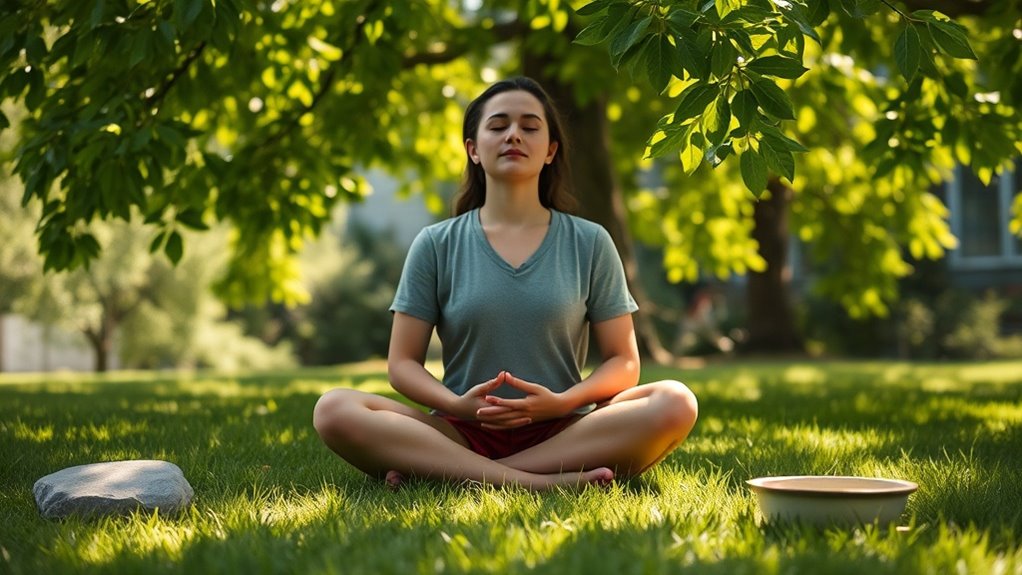
Practicing grounding techniques provides an effective way to manage immediate stress and regain a sense of control during overwhelming moments. These techniques, like the 5-4-3-2-1 method, help anchor you in the present-moment awareness by engaging your five senses—identifying visible objects, touch sensations, sounds, smells, and tastes. By shifting focus away from anxious thoughts, grounding techniques promote quick stress relief and calm your nervous system. They can be performed anywhere—whether at work, during a panic attack, or in noisy environments—making them highly accessible tools for immediate emotional regulation. Regularly practicing these techniques not only provides short-term relief but also strengthens your resilience over time. Supported by research, grounding exercises are proven to reduce acute stress and anxiety, empowering you to navigate challenging situations with greater calm and clarity. Incorporating them into your routine enhances your ability to stay present and resilient in daily life.
Common Questions
How Does Mindfulness Build Resilience?
Mindfulness builds resilience by enhancing your emotional regulation and reducing stress through proven techniques. When you practice present-moment awareness, you respond thoughtfully rather than react impulsively, fostering positive self-talk and acceptance of challenges. This mental shift activates neural pathways associated with positive emotions, making you more adaptable during adversity. Consistent mindfulness strengthens your ability to manage stress, ultimately cultivating a resilient mindset capable of facing life’s uncertainties with greater confidence.
What Are the 7 C’s to Build Resilience?
The 7 C’s of resilience are Confidence, Connection, Character, Contribution, Coping, Control, and Commitment. By fostering a positive mindset, you enhance stress management and emotional regulation, which are vital in adversity. Building confidence and strong connections supports your emotional resilience, while maintaining character and commitment sustains purpose. Developing coping strategies and focusing on control empower you to navigate challenges effectively, reinforcing your overall resilience with a balanced, empathetic approach.
What Are the 5 R’s of Mindfulness?
Think of the 5 R’s of mindfulness as your mental toolkit. They include Present-Focus, fostering mindful breathing and emotional awareness to reduce stress, helping you stay grounded. Flexibility allows you to adapt, while Tolerating Uncertainty encourages acceptance of life’s unpredictability. Self-Knowledge and Self-Control deepen your self-awareness, empowering you to manage emotions effectively. Together, these principles build resilience by anchoring you in the moment and promoting emotional balance.
What Are the 7 C’s of Mindfulness?
The 7 C’s of mindfulness—Calm, Curiosity, Compassion, Clarity, Courage, Confidence, and Connectedness—serve as essential tools for enhancing emotional regulation techniques and stress reduction strategies. By practicing mindful communication and cultivating these qualities, you can better manage emotional responses, foster resilience, and build meaningful connections. These core aspects encourage an open, empathetic mindset, helping you stay grounded in the present and navigate challenges with greater clarity and confidence.
To Sum it up
By weaving these mindful habits into your daily life, you’re planting seeds of resilience that grow stronger with each practice. Think of your mind as a garden—nurture it with gratitude, breath, and grounding techniques, and watch your emotional and physical well-being flourish. These evidence-based strategies act as anchors in turbulent times, helping you navigate stress with the steady hand of mindfulness. Remember, resilience isn’t built overnight, but with patience, your inner strength will blossom.