
To create focus zones in your home or office, choose a quiet corner away from busy areas and add noise-reducing elements like rugs and acoustic panels. Use purposeful furniture—ergonomic chairs and adjustable desks—and layer your lighting with warm, indirect sources. Clearly mark the space with visual cues, and keep it flexible with modular pieces. Regularly assess and adjust the setup to fit your evolving needs—more insights await to help you perfect your space.
Key Takeaways
- Choose a quiet, low-traffic area away from distractions and noisy appliances.
- Use purpose-specific furniture like ergonomic chairs, standing desks, and acoustic panels to enhance focus.
- Incorporate layered lighting with warm, indirect sources and visual cues such as signage to define the zone.
- Arrange furniture to create a simple, comfortable layout that supports deep work or reading activities.
- Regularly review and adapt the space with modular furniture and feedback to maintain functionality and comfort.
Defining the Purpose and Layout of Your Focus Zone
To create an effective focus zone, you first need to clearly define its primary purpose—whether it’s for deep work, reading, or creative thinking—as this will shape its layout and design. Your focus zone should be a dedicated space where everything supports your activity, so start by clarifying its purpose. This helps you choose the right furniture, tools, and visual cues that reinforce its role. The layout should prioritize simplicity and comfort, ensuring the space feels inviting yet functional. Incorporate purpose-specific furniture, like ergonomic chairs or standing desks, to support your work style. Position your focus zone away from high-traffic areas and noise sources to minimize distractions. Use subtle lighting and visual cues, such as signage, to signal its role. Ultimately, the goal is to craft a space that promotes concentration, feels accessible, and aligns with your focus needs.
Choosing the Right Location and Acoustic Solutions
Choosing the right location for your focus zone is key to fostering concentration and minimizing interruptions. Pick a quiet, low-traffic corner away from noisy appliances, walkways, and busy areas like kitchens or printers. Position your space near natural light sources or greenery to boost relaxation and focus. To enhance privacy and reduce noise, consider acoustic solutions such as sound-absorbing panels, rugs, or cushioned furniture. High-back chairs or upholstered seating can block ambient sounds and create a sense of enclosure. Avoid placing your focus zone next to high-noise zones to keep disruptions at bay.
Choose a quiet, low-traffic corner near natural light to enhance focus and reduce distractions.
To optimize your setup, keep these in mind:
- Locate away from busy entrances or communal areas
- Use natural light to create a calming environment
- Incorporate acoustic panels or sound-absorbing materials
- Choose furniture that enhances privacy and dampens noise
- Ensure the space is secluded from noisy appliances and foot traffic
Selecting Comfortable and Purposeful Furniture
Selecting comfortable and purposeful furniture is essential for creating a focused environment that promotes productivity without distractions. When choosing pieces, prioritize ergonomic furniture like adjustable chairs with lumbar support, which helps you stay comfortable and reduces strain during long work sessions. Purposeful furniture, such as acoustic panels or high-back chairs, can dampen noise and enhance your concentration, creating a space feel that’s calm and inviting. Opt for furniture with clean lines and minimal clutter to foster a sense of tranquility and deepen focus. Incorporate flexible, modular pieces like movable desks or lightweight seating, allowing your focus zone to adapt as your needs evolve. The goal is to create something that balances comfort and function, ensuring your space feels intentional and free of unnecessary distractions. Well-chosen furniture not only enhances comfort but also reinforces the purpose of your focus zone, making it easier to stay engaged and productive.
Implementing Effective Lighting and Signaling Techniques
Effective lighting and clear signaling are key to defining your focus zones and maintaining productivity. Layered lighting with adjustable ambient, task, and accent lights creates a versatile environment that reduces eye strain and supports different work needs. Incorporate warm-toned, indirect lighting to foster a calming atmosphere that enhances concentration and alertness. Visual signaling, such as subtle signage like “Focus Zone,” clearly indicates the space’s purpose, reinforcing its role for deep work. Avoid harsh fluorescent or clinical lighting, opting instead for soft, diffuse sources that promote comfort and focus. To optimize your focus zones, consider these techniques:
Layer your lighting and add visual cues to create inviting, focused work zones that boost productivity and comfort.
- Use layered lighting to tailor brightness levels.
- Implement ambient lighting for a soothing backdrop.
- Add task lighting for specific tasks requiring focus.
- Incorporate visual signaling like color coding or labels.
- Use warm, indirect lighting to create an inviting environment.
Maintaining Flexibility and Regularly Reviewing the Space
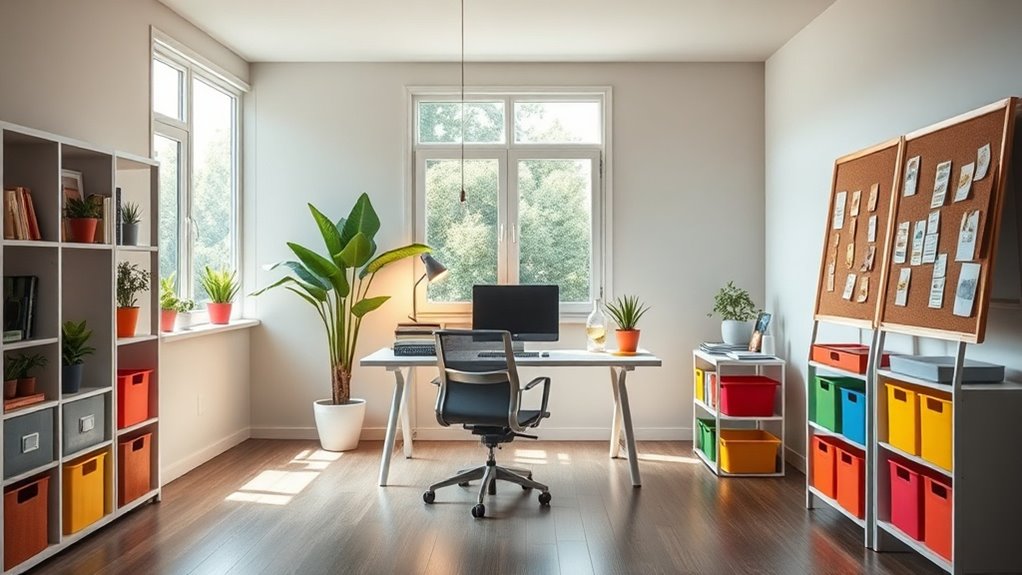
Maintaining a focus zone that adapts to your evolving needs requires ongoing attention and intentional adjustments. Regularly reviewing your space ensures it remains functional, clutter-free, and aligned with your goals. Incorporate flexibility by choosing modular furniture and adaptable layouts, making it easy to reconfigure as your activities change. Schedule periodic reviews—quarterly or biannual—to evaluate lighting, acoustics, and décor, optimizing both focus and comfort. Use feedback from yourself or team members to identify what’s working and what needs tweaking. Prioritize adaptability by selecting versatile elements that can be moved, expanded, or redefined with minimal effort. This proactive approach keeps your focus zone dynamic, ensuring it continues to serve your current needs effectively. By maintaining flexibility and conducting regular reviews, you create a space that evolves seamlessly with you, supporting sustained productivity and well-being.
Common Questions
How to Create Zones in Home?
To create zones in your home, start with thoughtful furniture placement to define each area. Use lighting design and color schemes to set the mood—bright for work, calming for relaxation. Add decorative accents that reflect each zone’s purpose, and incorporate rugs or dividers for visual separation. Regularly adjust these elements to guarantee your spaces remain functional and aesthetically pleasing, supporting your evolving needs and maintaining a balanced, inspiring environment.
How to Create a Living Room Focal Point?
To create a living room focal point, start with a striking fireplace centerpiece or artwork placement that captures attention. Arrange furniture to face this feature, ensuring a clear view. Enhance its impact with thoughtful lighting design, like accent or ambient lights, to highlight the area. Keep surrounding decor simple and cohesive in color. This approach makes your focal point both aesthetic and functional, anchoring your living space effortlessly.
How to Make a Home Office Less Depressing?
A bright room is a happy room, so start by maximizing natural lighting to lift your mood. Choose calming color schemes like soft blues or greens to create serenity. Invest in ergonomic furniture for comfort and focus. Keep clutter management in check to reduce stress, and add personal touches like inspiring artwork. These simple steps transform your home office into a space that feels inviting and uplifting, making work less depressing and more inspiring.
How to Focus More When Working From Home?
To focus more when working from home, prioritize noise reduction with noise-canceling headphones or acoustic panels. Enhance lighting with natural light and warm bulbs to boost alertness. Use color coordination—calming tones like blues or greens—to create a serene environment. Keep clutter management in check by organizing your space, which minimizes distractions. These elements together foster a functional, aesthetic workspace that supports concentration and productivity.
To Sum it up
Creating a focus zone is like tending a delicate garden—you nurture it with purpose, adapt as needed, and watch productivity flourish. When you design your space thoughtfully, it becomes a sanctuary where ideas grow and distractions fade away. Remember, even the most beautiful garden needs regular care; revisit and refine your focus zone to keep it vibrant. With intention and care, your space will become a haven of clarity in your busy world.