
To manage overstimulation in a noisy world, start by recognizing your early signs like headaches or racing thoughts. Create a calm space using soundproofing, noise-canceling headphones, or quiet zones. Practice grounding techniques such as deep breathing or visualization, and limit digital exposure to reduce sensory overload. Planning ahead, like packing sensory tools and scheduling breaks, can make a difference. Exploring these strategies further can help you build resilience and find comfort amidst constant stimuli.
Key Takeaways
- Identify personal sensory triggers and early signs of overload to implement timely coping strategies.
- Create quiet, sensory-friendly spaces using soundproofing, calming lighting, and designated calm zones.
- Use noise-canceling headphones and visual or auditory aids to reduce sensory input during stressful moments.
- Practice grounding techniques and relaxation exercises daily to build resilience against overstimulation.
- Plan activities during quieter times and communicate your needs to others for a supportive environment.
Recognizing the Signs of Overstimulation
Have you ever noticed feeling suddenly overwhelmed or irritable without an obvious reason? That’s often a sign of sensory overload, where your brain struggles to process excess sensory input. Recognizing signs of overstimulation is key to managing it. Physical symptoms like headaches, dizziness, muscle tension, rapid heartbeat, sweating, or trembling can alert you that your senses are overwhelmed. Emotional reactions such as irritability, anxiety, or tearfulness often accompany these physical signs. You might also notice difficulty concentrating, racing thoughts, or feeling emotionally drained. Common triggers include intense lights and loud sounds, which can intensify sensory overload quickly. If you’re experiencing heightened sensitivity to sensory input, it’s a signal your nervous system needs a break. By tuning into these early signs, you can intervene before overstimulation worsens, helping you regain a sense of control amid a noisy world.
Creating a Calm and Quiet Environment
Creating a calm and quiet environment starts with choosing spaces that minimize sensory input, like quiet rooms or areas with soundproofing. Using techniques such as heavy curtains, rugs, or acoustic panels can markedly reduce external noise, fostering a more peaceful setting. Additionally, designating specific zones for relaxation—free from digital devices and visual clutter—helps prevent overstimulation and promotes tranquility.
Use Soundproofing Techniques
When noise becomes overwhelming, implementing soundproofing techniques can make a considerable difference in establishing a calmer environment. By reducing noise levels, you create a space less prone to sensory overload. Acoustic panels absorb sound waves, lowering echo and muffling external noise, often reducing noise levels by up to 70%. Weatherstripping and door sweeps block outdoor sounds, minimizing overstimulation. Soundproof curtains made from dense materials can markedly diminish indoor noise, especially in bedrooms or workspaces. To visualize, imagine:
- Installing acoustic panels on walls for a softer, quieter space
- Using soundproof curtains to shield against outside noise
- Creating designated quiet zones with soundproofing elements for retreat and calm
These strategies foster a sensory-friendly environment, helping you regain control amid a noisy world.
Designate Quiet Spaces
After implementing soundproofing techniques to reduce external noise, the next step in managing overstimulation is designating specific quiet spaces within your environment. These quiet spaces serve as refuges from sensory overload, offering a calm environment with minimal sensory input. Incorporate calming elements like soft pillows, gentle lighting, soothing scents, and background music to enhance sensory regulation and promote relaxation. Structuring routines that include regular visits to these zones can help maintain mental resilience and prevent overstimulation from escalating. Clearly signaling and maintaining these quiet zones with signs or barriers encourages consistent use and respect for personal boundaries. Creating a designated calm environment supports stress reduction and offers a reliable space to regain composure amid a noisy world.
Implementing Grounding and Relaxation Techniques

Implementing grounding and relaxation techniques can be powerful tools for managing overstimulation, especially during stressful moments. Practices like deep breathing and mindfulness meditation activate your body’s calming systems and help reduce cortisol levels. Consistently using these methods builds resilience, making it easier to regain calm in noisy environments.
Deep Breathing Exercises
Deep breathing exercises serve as a practical and effective way to ground yourself amid sensory overload. By focusing on your breath, you activate the parasympathetic nervous system, which promotes calming techniques and stress relief. Techniques like the 4-7-8 method or serial three breathing help slow your heart rate and lower cortisol levels, providing immediate relief from overwhelming stimuli. Regular practice strengthens your ability to manage overstimulation and enhances emotional regulation over time. Incorporating deep breathing into daily routines builds resilience to noisy environments and supports overall mental well-being.
- Visualize your breath flowing smoothly, like waves lapping at the shore
- Count each inhale and exhale to redirect attention away from stimuli
- Feel your chest rise and fall, grounding you in the present moment
Mindfulness and Visualization
Since sensory overload can quickly become overwhelming, incorporating mindfulness and visualization techniques offers a practical way to promote calmness and regain focus. Practicing mindfulness through focused breathing and body scans activates your parasympathetic nervous system, helping to reduce stress and sensory overload. Visualization techniques, like imagining a peaceful place, can calm your mind and decrease physiological responses to overstimulation. Regular mindfulness exercises improve self-awareness, allowing you to recognize early signs of overstimulation and respond proactively. Guided imagery sessions lasting just 5-10 minutes have proven effective in lowering cortisol levels and fostering relaxation. Additionally, grounding techniques—such as holding a cold object or focusing on sensory details—help anchor your attention, alleviating feelings of chaos and promoting a sense of stability amidst noise and stimulation.
Managing Digital Overload and Screen Time
In today’s digital age, it’s easy to become overwhelmed by constant screen exposure, which can lead to mental fatigue and reduced focus. Excessive screen time contributes to sensory overload and eye strain, especially with prolonged blue light exposure. Managing digital overload involves creating healthy boundaries to protect your mental well-being.
Constant screen exposure causes mental fatigue and eye strain; set boundaries to protect your well-being and focus.
Consider these strategies:
- Limit your daily screen time to under two hours to reduce overstimulation.
- Turn off non-essential notifications to lessen mental fatigue caused by constant alerts.
- Take regular breaks every 30 minutes to decompress and prevent sensory overload.
Additionally, using blue light filters or glasses can help minimize eye strain, while establishing technology-free zones during meals or before bed supports healthier boundaries. These practices foster a balanced digital environment, helping you regain focus and lower the risk of digital fatigue in today’s noisy, overstimulating world.
Planning and Preparing for Overstimulating Situations
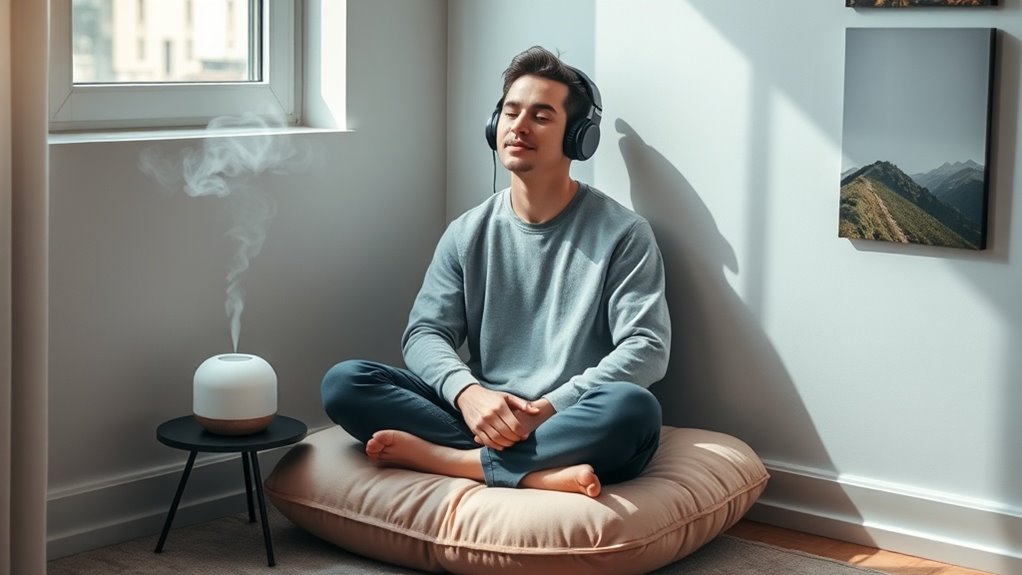
Preparing for overstimulating situations starts with understanding what environments might trigger your sensory overload. Research venue noise levels, lighting, and crowd density beforehand to anticipate potential challenges. Creating a sensory toolkit with noise-canceling headphones, sunglasses, calming scents, or fidget objects can help you stay grounded during overwhelming moments. Planning quiet intervals within busy events allows your nervous system time to reset, reducing the risk of overstimulation. Communicating your sensory needs to friends, family, or colleagues in advance enables environment modification, such as adjusting activities or settings to suit your comfort. Developing coping strategies like deep breathing or mindfulness exercises provides quick relief if signs of overstimulation occur. To make this process easier, consider this environment modification checklist:
| Environment Aspect | Action Item |
|---|---|
| Noise levels | Use noise-canceling headphones |
| Lighting | Seek well-lit or dim areas |
| Crowd density | Choose less crowded times |
Seeking Support and Building Long-term Resilience
Seeking support and building long-term resilience are essential steps in managing overstimulation effectively. When you seek support—whether through therapy, counseling, or support groups—you gain personalized strategies to navigate sensory sensitivities and triggers. Building resilience involves consistent practices like relaxation techniques, mindfulness, and increasing self-awareness, enabling you to better handle sensory overload episodes. Educating yourself about your sensitivities empowers you to proactively modify environments and routines, reducing overstimulation’s frequency and intensity. Developing a supportive network offers emotional encouragement and shared coping strategies, strengthening your mental resilience over time. Incorporating daily habits such as adequate sleep, balanced nutrition, and regular physical activity further fortifies your nervous system. These combined efforts foster a proactive approach, helping you adapt to a noisy world with greater strength and clarity.
- Visualize a calm, supportive environment where you feel understood and empowered.
- Consider how mindfulness and relaxation techniques become part of your daily routine.
- Recognize the importance of self-awareness in identifying and managing sensory sensitivities.
Common Questions
How to Deal With Being Overstimulated by Noise?
When you’re overstimulated by noise, try using earplugs or noise-canceling headphones to block out disruptive sounds. Incorporate calming techniques like meditation or deep breathing to soothe your nervous system. Sensory tools, such as calming music or personalized soundscapes, can help mask noise sensitivity. Taking breaks in quiet environments and setting boundaries also prevent overload, making it easier to manage sensory overwhelm and maintain your well-being.
How to Deal With Overstimulation in Quiet Hours?
When quiet hours feel overwhelming, remember that overstimulation isn’t just noise—it’s also silence. Use sensory tools like earplugs or calming routines such as mindful breathing and mental grounding to reconnect. Environmental adjustments, like dimming lights, help ease your senses, while engaging in gentle activities supports relaxation. By balancing sensory input and establishing routines, you create a safe space to restore calm amid quiet overstimulation.
How to Calm Down When Overstimulated?
When you’re overwhelmed by sensory overload, try calming techniques like deep breathing or grounding exercises to activate relaxation strategies. Practicing mindfulness, such as focusing on your breath or specific sounds, can help center your attention. Make environmental adjustments by finding a quiet space or dimming lights. These evidence-based relaxation strategies reduce stress, helping you regain control and ease your nervous system during overstimulation.
Do People With ADHD Get Overstimulated With Noise?
Yes, people with ADHD often experience sensory overload from noise, driven by heightened auditory sensitivity and noise intolerance. This can lead to distraction and frustration, making sound filtering challenging. The constant barrage of noise intensifies their difficulty in distraction management, resulting in mental fatigue. Recognizing this, strategies like noise-canceling headphones or quiet spaces become essential, helping you regain control and reduce overstimulation in your environment.
To Sum it up
Managing overstimulation isn’t just about avoiding noise; research suggests that our brains can adapt and strengthen resilience with consistent strategies. By recognizing signs early and creating calm routines, you support your mental health long-term. While some believe overstimulation is inevitable in today’s world, evidence shows that intentional grounding, digital boundaries, and support systems can profoundly reduce its impact. You have the power to foster a more balanced, resilient mindset—your well-being depends on it.