
Trace minerals like iron, zinc, selenium, iodine, chromium, and manganese are essential for crucial brain function. They support neural development, enhance neurotransmission, regulate enzymatic activities, and protect against oxidative stress, all of which influence memory, learning, and cognitive resilience. Deficiencies can impair brain signals, reduce neuroplasticity, and accelerate neurodegeneration. Understanding the precise roles of these minerals helps you maximize neural health—continuing explores how you can maintain balanced mineral levels for lifelong cognitive vitality.
Key Takeaways
- Essential trace minerals like iron, zinc, selenium, chromium, iodine, and manganese support neural development, neurotransmission, and cognitive function.
- Zinc enhances synaptic plasticity, promotes dendritic growth, and is crucial for learning and memory.
- Iron ensures neurons receive adequate oxygen, essential for neural metabolism and cognitive performance.
- Selenium acts as an antioxidant, protecting neural tissues from oxidative stress and supporting neuroprotection.
- Proper mineral balance maintains brain energy, supports neurotransmitter synthesis, and reduces neurodegenerative risks.
The Role of Iron in Cognitive Development and Brain Health
Iron plays a critical role in supporting cognitive development and maintaining brain health by facilitating oxygen transport via hemoglobin and myoglobin, which are essential for neural metabolism and function. Adequate iron levels ensure that neurons receive sufficient oxygen, promoting ideal cognitive performance. During developmental stages, iron deficiency can impair cognitive development, leading to learning difficulties and delayed neurodevelopment. MRI studies reveal increased iron deposits in key brain regions such as the hippocampus and putamen, highlighting iron’s involvement in neural integrity and neurodegenerative processes. Iron deficiency anemia is associated with decreased mental alertness, concentration problems, and overall cognitive fatigue, underscoring the importance of maintaining sufficient iron levels. Proper iron intake through diet or supplementation supports neurodevelopmental processes and helps preserve brain health over time. Hence, guaranteeing adequate iron status is fundamental for fostering healthy cognitive growth and preventing neurodevelopmental and neurodegenerative disorders.
Zinc’s Impact on Neurotransmission and Memory Processes
Zinc functions as a critical cofactor in enzymes that facilitate neurotransmitter synthesis and synaptic plasticity, directly impacting memory formation. Adequate zinc levels enhance hippocampal neuron activity and neural signal transmission, supporting cognitive processes like learning and recall. Conversely, zinc deficiency impairs synaptic communication, leading to measurable deficits in memory retention and overall cognitive performance.
Zinc’s Role in Synaptic Plasticity
Zinc functions as an essential cofactor for enzymes that are pivotal in neurotransmitter synthesis and synaptic function, thus directly influencing synaptic plasticity. Adequate zinc levels modulate NMDA receptor activity, which is critical for neural communication underlying learning and memory. Zinc also promotes structural plasticity by encouraging dendritic growth and spine formation in hippocampal neurons, essential for efficient synaptic connectivity. Disruptions in zinc homeostasis impair long-term potentiation (LTP), a cellular mechanism fundamental to memory consolidation. Supplementing zinc enhances cognitive performance by strengthening synaptic connections and supporting neuroplasticity. Consequently, zinc’s role in synaptic plasticity is crucial for maintaining adaptable neural circuits, ultimately facilitating improved information processing and memory functions in the brain.
Enhancing Neural Signal Transmission
Because neurotransmitter synthesis and release are fundamental to neural communication, trace minerals like zinc are essential in modulating these processes. Zinc acts as a critical cofactor for enzymes that produce neurotransmitters, directly affecting synaptic transmission efficiency. Adequate zinc levels support synaptic plasticity, strengthening neural connections crucial for learning and memory. By modulating glutamate receptors, zinc influences excitatory neurotransmission and maintains neural excitability. When zinc levels are sufficient, neural signaling pathways function most effectively, enhancing the fidelity of signal transmission across synapses. Conversely, zinc deficiency impairs hippocampal function, disrupting neurotransmitter dynamics and reducing cognitive performance. Supplementing with bioavailable zinc reinforces these mechanisms, leading to improved neural communication and supporting memory processes through stabilized neurotransmitter activity and enhanced synaptic adaptability.
Zinc Deficiency and Memory Loss
Imbalances in zinc levels can considerably impair neural signaling pathways, leading to disruptions in neurotransmitter function and synaptic plasticity—both fundamental to effective learning and memory. Zinc deficiency hampers hippocampal development, which is essential for memory formation, resulting in compromised cognitive performance. Research indicates that low zinc levels directly contribute to memory loss and deficits in information processing and retrieval. In both animal models and humans, inadequate zinc impairs neurotransmitter release and synaptic strength, undermining neural communication essential for memory consolidation. Conversely, zinc supplementation has demonstrated potential in restoring cognitive functions affected by deficiency. Maintaining best possible zinc levels is therefore indispensable for preserving memory integrity and supporting neuroplasticity necessary for learning processes.
The Significance of Selenium in Protecting Brain Cells
Selenium functions as a critical antioxidant, mitigating oxidative stress and safeguarding neural cells from free radical damage. Its role in supporting enzymes like glutathione peroxidase enhances neuroprotection and detoxification processes. Maintaining adequate selenium levels is associated with reduced neuronal decline and improved cognitive resilience during aging.
Selenium’s Antioxidant Role
Selenium plays a vital role in the brain’s antioxidant defense system by serving as a key component of glutathione peroxidase, an enzyme responsible for neutralizing harmful peroxides. This function is essential for mitigating oxidative stress, which damages neural tissues and impairs cognitive processes. Adequate selenium levels support neuroprotection by reducing oxidative damage to neurons, thereby helping preserve neural integrity. Selenium deficiency correlates with increased oxidative stress and heightened vulnerability to neurodegenerative conditions. Supplementing selenium enhances the brain’s antioxidant capacity, promoting resilience against free radical-induced injury. Maintaining ideal selenium intake is indispensable for the brain’s defense mechanisms, as it directly influences the enzyme’s efficiency in combating oxidative stress, ultimately supporting cognitive health and neuroprotection through its antioxidant role.
Neuroprotective Effects of Selenium
Given its role as a potent antioxidant mineral, selenium is essential for safeguarding brain cells from oxidative damage. Its antioxidant properties stem from its ability to enhance glutathione peroxidase activity, a key enzyme in neutralizing peroxide-induced oxidative stress within neural tissue. Adequate selenium levels promote neuroprotection by reducing neuroinflammation, decreasing neuronal cell death, and supporting cognitive function. Research indicates that selenium deficiency correlates with increased vulnerability to neurodegenerative conditions such as Alzheimer’s, emphasizing its neuroprotective importance. Animal studies further confirm that selenium supplementation can improve memory and neuronal health by supporting critical signaling pathways like insulin and IGF-1. Overall, selenium’s antioxidant capacity directly contributes to maintaining brain cell integrity and resilience against oxidative insults.
Selenium and Brain Aging
As the brain ages, oxidative stress plays a significant role in the decline of neural integrity, making protective mechanisms increasingly essential. Selenium, a key antioxidant mineral, supports this defense by enabling glutathione peroxidase to detoxify harmful peroxides in brain tissue. Deficiencies in selenium are linked to accelerated brain aging and heightened risk of cognitive decline. Ensuring adequate selenium intake—via diet or supplements—can bolster neuroprotection and preserve cognitive function. The table below summarizes selenium’s role:
| Selenium Level | Impact on Brain Aging | Effect on Cognitive Decline |
|---|---|---|
| Adequate | Slows neurodegeneration | Reduces cognitive decline |
| Deficient | Accelerates aging | Increases risk |
| Supplemented | Neuroprotective effects | Enhances neural resilience |
| Insufficient | Heightened vulnerability | Impairs neural health |
Optimizing selenium status is vital in mitigating age-related neurodegeneration.
Fluoride’s Contribution to Neural Function and Skeletal Integrity
Fluoride plays a critical role not only in maintaining the structural integrity of bones and teeth but also in supporting neural function through its interactions within the brain’s mineral environment. Adequate fluoride levels are essential for proper skeletal development and mineralization, ensuring skeletal robustness and resistance to fractures. In neural tissues, fluoride influences neural signaling pathways by interacting with calcium and other minerals, which can modulate cognitive processes and neural communication. Community studies reveal that ideal fluoride concentrations in drinking water correlate with reduced dental caries and potentially enhanced neural integrity, highlighting fluoride’s systemic benefits. However, excess fluoride exposure during critical growth periods may impair skeletal development and neural function, underscoring the importance of balanced intake. Overall, fluoride’s contribution to neural function and skeletal integrity underscores its significance as a trace mineral crucial for both structural and cognitive health, emphasizing the need for carefully managed fluoride levels in public health strategies.
Chromium’s Influence on Glucose Metabolism and Brain Energy Supply
Chromium plays a vital role in supporting brain energy metabolism by enhancing insulin sensitivity, which is crucial for efficient glucose uptake into neural tissues. As a trace mineral, chromium facilitates optimal glucose metabolism, ensuring neurons receive a steady energy supply necessary for cognitive functions. Adequate chromium levels help stabilize blood sugar levels, preventing fluctuations that can lead to cognitive fatigue and reduced mental clarity. When chromium deficiency occurs, glucose utilization in neurons can become impaired, potentially affecting memory, concentration, and overall focus. Dietary sources such as whole grains, nuts, and liver provide bioavailable chromium critical for maintaining consistent brain energy. By supporting efficient glucose metabolism, chromium ensures that brain cells have a reliable energy source, which is essential for sustaining cognitive performance over time. Maintaining appropriate chromium intake is therefore fundamental for optimizing brain energy supply and preserving overall neural function.
Iodine and Thyroid Hormones: Maintaining Optimal Brain Function
Proper brain function depends heavily on the regulation of thyroid hormones, which are synthesized using iodine. These hormones—primarily thyroxine (T4) and triiodothyronine (T3)—are fundamental for brain development, especially during fetal growth and early childhood. Adequate iodine intake during pregnancy guarantees ideal synthesis of thyroid hormones, supporting fetal brain growth and reducing developmental delays. Conversely, iodine deficiency impairs thyroid hormone production, leading to hypothyroidism, characterized by mental sluggishness, poor concentration, and memory deficits. Maintaining appropriate iodine levels is essential, as both deficiency and excess can disrupt thyroid function, affecting neural activity and cognitive performance. Proper regulation of thyroid hormones influences neural connectivity, synaptic plasticity, and overall brain health. Hence, ensuring sufficient iodine intake is indispensable for sustaining the delicate balance necessary for healthy brain development and excellent cognitive function throughout life.
The Effects of Manganese on Enzymatic Activities and Brain Chemistry
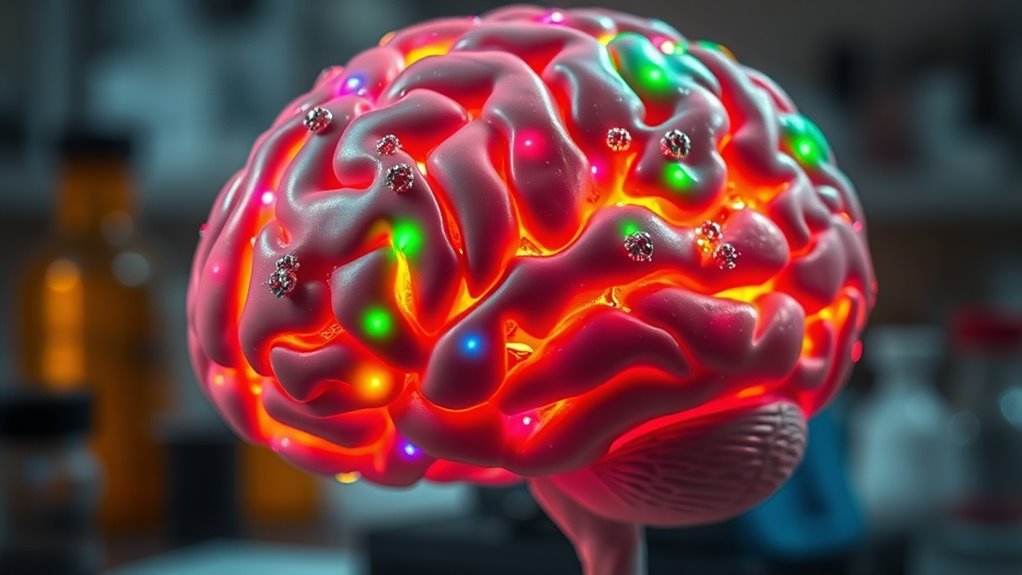
Manganese plays a vital role in brain chemistry by serving as a necessary cofactor for several key enzymes that regulate amino acid, cholesterol, and carbohydrate metabolism. These enzymatic activities directly influence neuronal function and neurotransmitter synthesis. A deficiency impairs enzymatic functions, leading to neurodevelopmental issues such as ataxia and disrupted coordination. Conversely, excess manganese causes neurotoxicity, mimicking Parkinson’s symptoms like tremors and motor deficits.
| Manganese-Dependent Enzymes | Functions in Brain Chemistry |
|---|---|
| MnSOD | Protects neurons from oxidative stress |
| Glutamine synthetase | Regulates neurotransmitter levels |
| Arginase | Involved in amino acid metabolism |
| HMG-CoA reductase | Cholesterol synthesis for cell membranes |
Maintaining ideal manganese levels ensures proper enzymatic activities, supporting healthy brain chemistry and cognitive functions. Imbalances disrupt these processes, highlighting manganese’s essential yet delicate role in neural health and enzymatic regulation.
Heavy Metal Toxicity: Risks of Aluminum, Cadmium, Mercury, Arsenic, and Lead
Heavy metal exposure poses significant risks to brain health by disrupting normal neural function and compromising cognitive integrity. Heavy metal toxicity, including aluminum, cadmium, mercury, arsenic, and lead, can induce neurotoxicity and accelerate neurodegeneration. Aluminum, often from cookware and contaminated water, accumulates in the hippocampus, impairing memory and learning. Cadmium, prevalent in cigarette smoke and foods, interferes with neural signaling, contributing to cognitive deficits. Mercury, especially methylmercury from seafood, crosses the blood-brain barrier, causing neurological damage and developmental delays. Arsenic exposure from contaminated water impairs cognitive processes and behavioral stability. Lead, historically used in paints and gasoline, persists in tissues, with even low levels linked to reduced IQ and behavioral issues.
- Disrupts neural signaling pathways
- Promotes oxidative stress in neural tissue
- Causes cellular apoptosis and damage
- Triggers chronic neuroinflammation
- Accelerates neurodegenerative processes
Interactions Between Trace Minerals and Vitamins in Neural Health
The intricate interplay between trace minerals and vitamins is fundamental to maintaining neural health, as these micronutrients often function synergistically within enzymatic reactions that underpin cognitive processes. Trace minerals such as zinc, selenium, and magnesium collaborate with vitamins like A, D, E, and B-complex to facilitate critical neural functions. For example, vitamin C enhances iron absorption, essential for oxygen delivery to the brain, supporting cognitive efficiency. Vitamin E’s antioxidant properties complement selenium’s role in mitigating oxidative stress within neural tissues, helping to prevent neurodegeneration. B-vitamins like B6, B12, and folate work with zinc and magnesium to promote neurotransmitter synthesis and nerve signal transmission. Disruptions in the balance of these nutrients impair processes like myelin formation, synaptic plasticity, and cognitive resilience. Consequently, understanding these interactions is vital for optimizing neural health, as deficiencies or imbalances can greatly compromise brain function and long-term cognitive integrity.
Dietary Strategies to Support Brain Function Through Trace Mineral Intake
To optimize brain function through trace mineral intake, incorporating mineral-rich foods such as shellfish, nuts, and leafy greens is essential. Ensuring these foods are consumed alongside strategies that enhance nutrient absorption—like pairing iron-rich sources with vitamin C—can maximize bioavailability. Careful selection and combination of dietary components are critical to maintaining mineral balance and supporting cognitive health.
Incorporate Mineral-Rich Foods
Incorporating mineral-rich foods into your diet is a targeted strategy to optimize brain function through essential trace minerals. Food and nutrition sources provide a practical means to support neural signaling, oxygen delivery, and cognitive processes. Prioritize magnesium-rich options like dark leafy greens, seeds, and nuts to facilitate neural communication. Zinc sources such as meat, shellfish, and legumes enhance synaptic plasticity and cognitive resilience. Iron-containing foods like red meat, poultry, and fortified cereals ensure oxygen transport crucial for mental clarity. Iodine from seaweed, fish, and dairy supports thyroid function and brain development. Selenium from Brazil nuts, seafood, and eggs offers antioxidant protection, safeguarding cognitive health and reducing oxidative stress. Proper selection of these foods directly influences brain function through trace mineral bioavailability and absorption.
Optimize Nutrient Absorption
Maximizing the absorption of trace minerals requires strategic dietary approaches that enhance bioavailability and counteract absorption inhibitors. To optimize nutrient absorption, focus on consuming a varied diet rich in minerals like magnesium, zinc, iron, iodine, and selenium, paired with foods that improve bioavailability. For instance, combining plant-based iron sources with vitamin C-rich foods such as citrus significantly boosts iron absorption, supporting cognitive health. Limiting dietary inhibitors like phytates and excessive fiber during mineral-rich meals prevents interference with mineral uptake. Incorporating nutrient-dense foods such as seafood, nuts, leafy greens, and whole grains ensures consistent supply and enhanced absorption of essential trace minerals. In some cases, natural mineral supplements like ConcenTrace can effectively bypass absorption barriers, delivering highly bioavailable trace minerals critical for ideal brain function.
Common Questions
What Is the Most Important Mineral for Your Brain?
Magnesium is the most important mineral for your brain because it regulates neurotransmitter activity, supports neural plasticity, and prevents excitotoxicity. Magnesium deficiency can impair cognitive functions, leading to brain fog and mood disorders. Zinc supplementation benefits include enhanced neurogenesis, but ideal trace mineral absorption is vital. Ensuring adequate magnesium levels helps maintain mental clarity, learning, and memory, making it essential for overall brain health and neuroprotection.
What Happens When You Start Taking Trace Minerals?
They say, “you are what you eat,” and starting trace minerals impacts your health immediately. When you begin supplementation, mineral absorption improves, addressing deficiency symptoms like cognitive fog and poor focus. These neurological benefits include enhanced neurotransmitter function and reduced neuroinflammation. However, too much can disrupt balance, so monitoring intake guarantees ideal brain function without toxicity, emphasizing the importance of precise, evidence-based supplementation for lasting mental clarity.
What Vitamin Cuts Dementia Risk by 40%?
Vitamin B12 cuts dementia risk by 40%. Addressing dietary deficiencies through adequate intake enhances cognitive functions and supports mineral absorption essential for neural health. Supplementing with B12 can considerably improve cognitive performance, counteracting neurodegeneration. As a crucial nutrient, its ideal levels are essential for preventing memory loss and cognitive decline, making it a key component in strategies aimed at reducing dementia risk and promoting long-term brain health.
What Are the Three Superfoods for Your Brain?
Your three superfoods for brain health are blueberries, fatty fish, and walnuts. Blueberries are rich in neuroprotective antioxidants like flavonoids, which combat oxidative stress and support memory. Fatty fish provides omega-3 fatty acids critical for neuronal membrane integrity and cognitive function. Walnuts contain DHA and polyphenols, enhancing brain plasticity. Incorporating these foods optimizes neuroprotection, boosts cognition, and complements the effects of cognitive boosting herbs for overall mental resilience.
To Sum it up
Just like a finely tuned orchestra relies on each instrument, your brain depends on trace minerals for ideal function. Neglecting these essential elements can be akin to a missing note, impairing cognition and increasing toxicity risks. Research shows even slight deficiencies can disrupt neural processes, emphasizing the importance of balanced intake. Prioritize these micronutrients through diet to guarantee your brain’s symphony remains harmonious, supporting cognitive resilience and overall neural health.