
To clear brain fog with mindful walking, find a peaceful spot with nature nearby. Set a clear goal, like boosting mental clarity, and focus on engaging all your senses—notice sights, sounds, textures, smells, and tastes. Synchronize your breath with your steps and practice gratitude for small blessings. Release worries by imagining them leaving with each stride. By paying full attention to your walk and combining these mindful techniques, you can enhance mental clarity and emotional calm—discover how to deepen this practice for lasting benefits.
Key Takeaways
- Choose a natural, quiet environment to engage all five senses and promote relaxation.
- Set a clear intention for mental clarity before starting your walk.
- Synchronize your breath with your steps to deepen focus and calm the nervous system.
- Practice mindful awareness of physical sensations and environmental elements during the walk.
- Use mental visualization techniques like gratitude and goal-focused imagery to reframe thoughts and reduce fog.
Select a Calm and Comfortable Environment
Choosing a calm and comfortable environment is essential for mindful walking because it helps you relax and stay focused. When you select a quiet, clutter-free space like a park, garden, or peaceful street, distractions decrease, making it easier to connect with your surroundings. A natural setting, such as trees, grass, or water, enhances relaxation and invites sensory engagement, allowing you to fully immerse in the experience. Ensuring the area feels safe and comfortable encourages a slow, deliberate pace, which is key to mindfulness. Good lighting and fresh air boost alertness and physical comfort, making your walk more enjoyable and effective. Avoid busy or noisy areas that can overwhelm your senses and distract you from the present moment. By choosing a space that promotes tranquility and natural beauty, you create an ideal environment for calming your mind and grounding yourself through mindful walking.
Set Your Intention for Clarity and Focus
Setting your intention before starting your mindful walk can markedly enhance your focus and mental clarity. When you clearly state your goal—whether aloud or silently—you give your mind a purpose, helping to reduce wandering thoughts. For example, you might say, “I am walking to clear my brain fog and enhance focus,” which reinforces your commitment. Visualizing achieving mental clarity during your walk primes your mind to prioritize awareness and concentration, making your practice more effective. Choosing a specific intention activates neural pathways linked to goal-oriented behavior, supporting a mental reset. Throughout your walk, repeating your intention helps strengthen your focus and keeps you aligned with your goal. This simple yet powerful step ensures that your mindful walking session is purposeful, sharpening your mental clarity and boosting your ability to stay present amid everyday distractions.
Engage All Five Senses During Your Walk
As you walk, take a moment to notice the sights, sounds, smells, textures, and tastes around you. Engaging all five senses helps you stay fully present and grounded in the moment. Pay attention to these details to deepen your mindfulness and connection with your environment.
Sensory Details Everywhere
To fully experience mindful walking, it’s helpful to engage all your senses along the way. This enhances your sensory awareness and deepens your mindfulness techniques, leading to greater mental clarity. As you walk, notice the shadows, colors, and reflections around you, using sight to anchor yourself in the present. Listen carefully for bird calls, rustling leaves, or distant traffic, allowing sound to deepen your awareness. Feel textures like the breeze on your skin, rough tree bark, or warm sunlight, connecting you to your environment. Smell nearby scents—fresh grass, blooming flowers, or rain-soaked earth—to engage your olfactory senses. If possible, savor the air or a small taste to complete this sensory journey. These simple steps make your walking meditation more vivid and grounding.
Stay Fully Present
When you walk mindfully, making a conscious effort to engage all five senses can profoundly deepen your awareness of the present moment. Focus on what you see—shadows, reflections, colors—using visual cues to anchor yourself. Listen for sounds like bird songs or rustling leaves, allowing your attention to settle there without judgment. Feel the textures of leaves or the breeze on your skin, and take in the scents of flowers or fresh air to heighten sensory engagement. If possible, savor a taste—like a sip of water or a piece of fruit—to fully immerse yourself. This intentional sensory awareness helps shift your mind away from racing thoughts, grounding you in the here and now. mindfulness becomes a tool for clarity and calm.
Coordinate Your Breath With Your Steps
To deepen your mindfulness, try syncing your breath with your steps, like inhaling for two steps and exhaling for three. Maintaining a steady pattern can help calm your nervous system and bring clarity to your mind. Start with a rhythm that feels comfortable, and gently adjust as you become more mindful of your walking pace.
Establish a Rhythmic Pattern
Establishing a rhythmic pattern by coordinating your breath with your steps can markedly enhance your mindful walking practice. By using breath synchronization, like inhaling for two steps and exhaling for three, you create a calming rhythm that promotes focus and relaxation. A consistent breath-to-step ratio helps regulate your nervous system, reducing mental clutter and easing brain fog. Starting with simple patterns, such as inhaling and exhaling for equal counts, makes it easier to build this habit. As you become more comfortable, you can gradually increase the duration. This steady rhythm acts as a mental metronome, minimizing distracting thoughts and deepening your mindfulness. Over time, this practice can markedly improve mental clarity and overall sense of calm during your walks.
Sync Breaths With Steps
Syncing your breaths with your steps creates a natural and calming rhythm that can deepen your mindful walking practice. By coordinating your inhale and exhale with specific numbers of steps, you establish a steady mental tempo that promotes stress reduction and enhances focus. Here are three ways breath synchronization can benefit you:
- It activates your parasympathetic nervous system, encouraging relaxation.
- It helps anchor your attention, improving mindfulness and reducing mental clutter.
- It supports cognitive clarity, making it easier to clear brain fog and stay present.
Practicing this breath-step pattern regularly can boost emotional regulation and foster a peaceful, centered mind. With consistent effort, you’ll find mindful walking becomes a powerful tool for calming your mind and improving overall well-being.
Use Counting Techniques
Have you ever noticed how counting your breaths can make your walking more focused and calming? Using counting techniques is a simple way to strengthen your mindfulness during walks. Silently count each step while coordinating your breath—inhale for a certain number of steps, then exhale for another. For example, inhale for two steps, exhale for three. This rhythm creates a calming pattern that helps regulate your nervous system, reducing stress and brain fog. Focusing your attention on counting keeps your mind present, preventing distracting thoughts from taking over. You can adjust the counts to fit your comfort, gradually increasing or decreasing steps per breath cycle. This practice anchors your mind, deepening your relaxation and sharpening your mental clarity.
Practice Gratitude With Each Step
As you walk, take a moment to identify and mentally note one thing you’re grateful for with each step. This simple act of gratitude can transform your walking into a powerful mindfulness practice that boosts mental clarity. Focus on small blessings, like your health, the comfort of your shoes, or the gentle breeze. To deepen this experience, consider these three points:
- Notice subtle details—such as the warmth of the sun or the scent of blooming flowers—to enhance your feelings of gratitude.
- Silently thank your body for carrying you effortlessly, reinforcing appreciation for your ability to walk.
- Use this moment to rewire your brain from negativity to positivity, strengthening neural pathways related to resilience and well-being.
Practicing gratitude during your mindful walking helps elevate your mood and creates a lasting mental shift toward positivity, clearing brain fog naturally.
Visualize Your Goals and Mental Clarity
As you walk mindfully, take a moment to imagine your goals clearly, which can boost your motivation and focus. Visualizing success helps reinforce your purpose and keeps you grounded during the walk. This simple practice can enhance mental clarity, making your journey both calming and inspiring.
Envision Future Success
When you walk mindfully while visualizing your future success, you’re actively strengthening the neural pathways that boost motivation and mental clarity. This practice rewires your brain, making your goals feel more reachable and boosting your confidence. As you focus on achieving specific accomplishments, your brain’s reward system becomes activated, supporting mental resilience. To make the most of this, try:
- Clearly imagining your future success to reinforce commitment.
- Visualizing specific goals to enhance neural connectivity related to goal-directed behavior.
- Regularly practicing these visualizations during walks to solidify motivation and clarity.
Strengthen Motivation Focus
Building on your practice of visualizing future success, focusing your mind during mindful walking can markedly boost your motivation and mental clarity. When you pair each step with a mental image of achieving your goals, you strengthen neural pathways linked to motivation and purpose, making your intentions more tangible. This visualization enhances focus by anchoring your attention to specific objectives, boosting your confidence with every step. Regularly imagining successes releases dopamine, helping sustain your motivation and mental resilience. Combining these mental images with sensory awareness makes goal pursuit more engaging and positive. As you walk mindfully, aligning your focus with your aspirations reduces brain fog and creates a clear sense of direction, reinforcing your commitment to progress and mental clarity.
Reinforce Clarity & Purpose
Have you ever noticed how visualizing your goals during a walk can sharpen your focus and bring a sense of purpose? When you pair visualization with movement, it strengthens neural pathways linked to mental clarity and purpose. This makes your goals feel more concrete and achievable, boosting your motivation. To reinforce this process:
- Visualize progress toward specific goals with each step.
- Imagine the positive feelings of success and clarity.
- Use sensory awareness to connect your goals with your surroundings.
This combination helps align your subconscious with your conscious intentions, reducing mental fog. As you walk mindfully, your mind becomes clearer, and your purpose sharpens, leaving you more motivated and focused for what lies ahead.
Release Worries and Negative Thoughts
As you walk mindfully, you can gently release worries and negative thoughts by visualizing each step as leaving them behind. Imagine negative thoughts being absorbed by the earth with every stride, helping you foster mindfulness and build mental clarity. Focus on the physical sensation of your movement, feeling your body awareness deepen as your feet connect with the ground. Incorporate deep breathing synchronized with your steps—inhale slowly, exhale gently—to create a calming rhythm that dissolves mental clutter. As worries surface, gently guide your attention back to the present moment, using your senses and bodily sensations as anchors. Visualize worries melting away or dissolving into the surroundings, reinforcing a sense of emotional release. This practice helps clear your mind, allowing you to cultivate a peaceful, focused state. Over time, releasing worries through mindful walking can markedly enhance your mental clarity and emotional resilience.
Focus Fully on the Sensation of Walking
Focusing fully on the sensation of walking helps deepen your mindfulness practice by anchoring your attention to the present moment. When you direct your awareness to how each step feels, you cultivate a stronger sense of focus and clarity.
Here are some ways to enhance your mindfulness during walking:
- Notice the texture and pressure of your foot as it lifts, moves, and touches the ground, paying attention to every detail.
- Feel the air against your skin, observing temperature, wind, or humidity, to connect with your environment.
- Observe how your muscles and joints move, sensing the stretch, contraction, and release with each step, syncing your focus with your breath.
Whenever your mind drifts, gently bring your attention back to these physical sensations. This practice sharpens your awareness and helps clear brain fog through simple, mindful focus.
Incorporate Natural Surroundings for Enhanced Rejuvenation
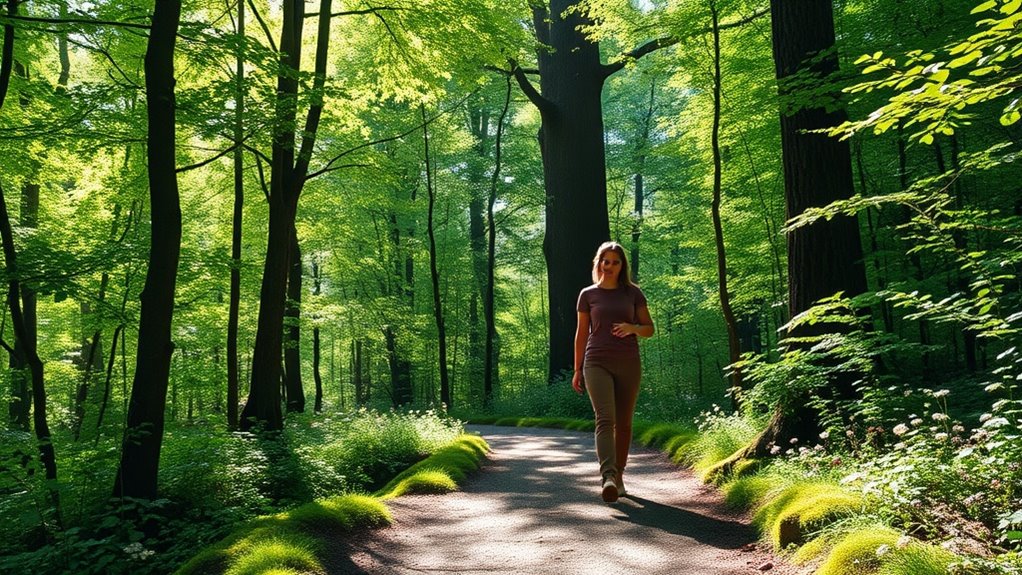
Walking in natural surroundings can considerably enhance your mindfulness practice by immersing you in a calming environment that engages all your senses. As you stroll through parks or forests, your sensory awareness deepens, making each step more mindful. The sights of greenery, sounds of birdsong, and scent of fresh air activate your senses and promote mental rejuvenation. Outdoor walks in green spaces are proven to lift mood and reduce brain fog more effectively than urban routes. The presence of natural sounds like flowing water or rustling leaves helps lower cortisol, encouraging relaxation. Incorporating these elements into your walk supports emotional regulation and stimulates neuroplasticity, helping clear mental clutter. To maximize benefits, choose routes with diverse natural features. This way, your walks become a healing ritual for both body and mind.
| Natural Surroundings | Benefits |
|---|---|
| Green spaces | Boosts mood, mental clarity |
| Natural sounds | Promotes relaxation |
| Diverse scenery | Enhances sensory awareness |
Establish a Consistent Routine for Ongoing Benefits
Creating a consistent routine for mindful walking can considerably deepen its benefits over time. When you make it a daily habit, your mind starts to associate specific cues with mindfulness, strengthening the practice. To build this routine:
- Choose a set time each day, like morning or lunch, so it becomes a natural part of your schedule.
- Use a dedicated route or location to create a sensory environment that signals your habit.
- Keep your walks brief, around 5-10 minutes, to make consistency easier and reinforce ongoing benefits.
Tracking your progress with a journal or app can boost motivation and help you notice mental clarity improvements. Pair your walk with calming cues, like deep breaths or a specific time of day, to reinforce the habit and enhance mindfulness. Remember, consistency is key—over time, this routine can clear brain fog and improve overall well-being.
Common Questions
Does Walking Get Rid of Brain Fog?
Walking can help get rid of brain fog by boosting blood flow and oxygen, which promotes mental clarity. Incorporate breathing techniques during your walk to deepen relaxation, similar to meditation benefits. Mindful movement therapy helps break mental clutter and improves focus. While it won’t cure underlying issues, regular walking in nature can temporarily lift foggy thinking, making you feel more alert and present in the moment.
What Is the Fastest Way to Clear Brain Fog?
The fastest way to clear brain fog is through a quick, focused meditative practice like mindful walking. By engaging your sensory awareness—feeling textures, listening to sounds—you activate calming techniques that boost mental clarity. Synchronize your breath with each step, visualize releasing worries, and embrace relaxation. This simple routine resets your mind, sharpens focus, and clears mental haze swiftly, giving you a fresh, clear perspective in just minutes.
What Is the Best Exercise for Brain Fog?
The best exercise for brain fog is mindful movement, like mindful walking or gentle cycling. It boosts mental clarity by increasing blood flow and releasing mood-enhancing chemicals. Combining physical wellness with meditation techniques helps calm your mind and improve focus. Regular practice, especially outdoors, enhances mental sharpness and reduces cognitive fatigue. You’ll feel more alert and centered, making it easier to tackle daily challenges with clarity.
How Long Should I Walk to Clear My Mind?
You should aim for a walking duration of at least 10-20 minutes, as this allows your mind to reset effectively. Focus on mindful pacing, paying attention to your senses and breath. Short walking intervals of 5-10 minutes can help when you’re short on time, but longer walks promote deeper clarity. Consistent exercise timing each day makes it easier to clear brain fog and feel more focused throughout your day.
To Sum it up
By blending breath, body, and surroundings with gentle gratitude, you’ll cultivate calm and clarity. Consistent, conscious walking helps clear cluttered thoughts and reconnects you with the present moment. Remember, progress is personal—patience and persistence pay off. So step softly, breathe deeply, and embrace each mindful mile. With time, your mind will feel lighter, your focus sharper, and your spirit renewed. Keep walking, keep wondering, and let mindfulness make your mind marvelous.